Thursday, July 29, 2021

What is American wokeness really about?


 What is American wokeness really about?

Victor Davis Hanson, JWV

Most Americans were as indifferent to the U.S. women's soccer team's recent loss to Sweden in the Olympics as they were excited about the team's World Cup win in 2019.

In between was the team's nonstop politicking, from whining about compensation to virtue-signaling their disrespect for the United States. The celebrity face of the team, perennial scold Megan Rapinoe, is going the way of teenage grouch Greta Thunberg, becoming more pinched the more she is tuned out.

Black Lives Matter co-founder Patrisse Marie Khan-Cullors Brignac used her corporate grifting to buy four homes. The one she bought in California's Topanga Canyon is surrounded by a new $35,000 security fence.

Critical race theory guru Ibram X. Kendi offers virtual, one-hour workshops for $20,000 a pop. He is franchising woke re-education kits — in between bouts of damning capitalism as a catalyst of racism.

The woke movement is a slicker, more sophisticated and far more grandiose version of Al Sharpton and Jesse Jackson's shakedowns of the 1990s. Those, at least, were far more honest in leveraging cash with charges of racism — and came without the academic gobbledygook of critical race theory.

Our freeways are jammed. Airports are crammed. Labor is short. Huge pent-up consumer demand for essentials and entertainment outpaces supply. Yet Major League Baseball's recent All-Star Game saw record low television viewership — about a quarter of the audience of 40 years ago, when there were 100 million fewer Americans.

The Summer Olympic Games are getting anemic TV ratings. The NBA's crashing TV ratings have followed the downward trajectory of the NFL's ratings. Woke sports earn the same public disgust as the accusatory and boring Emmy, Grammy, Oscar and Tony awards.

Cable news networks CNN and MSNBC fueled the story that former President Donald Trump allegedly colluded with Russia. They contextualized (to excuse) the summer looting and rioting of 2020. And they cheered on two impeachments as a prelude to their 24/7 woke drumbeat. Their ratings, too, have now dived.

Never has TV been more politicized. Sitcoms, dramas and commercials are designed more to resonate woke messaging than to entertain. So naturally, dismal TV ratings reflect the expected public boredom that ensues when art serves politics.

How many times will disingenuous Dr. Anthony Fauci swear that he never sent federal money to the Wuhan virology lab for gain-of-function research, or blame his critics for pointing out his gyrating advice on masks, or offer yet another noble lie on herd immunity?

In short, Americans are worn out from elite virtue-signaling and woke performance art from critical race theory capitalists, multimillionaire CEOs, revolving-door Pentagon brass, Malibu celebrities and credentialed elite.

The problem is not just that most of America is exhausted from being smeared as racists, or hearing that a wonderful country — the most free, just, equitable, affluent and leisured in civilization's history — must continually pay penance for its past and present. The public is more tired of projectionist hypocrisy. Those who scream the loudest are usually the most guilty of woke crimes.

The woke madness coincides with an epidemic of crises that go largely ignored as a distracted America cannibalizes itself.

The border is being breached at a time of pandemic. Migrants barge in without either COVID-19 testing or vaccinations — during a coronavirus spike that has government officials talking about going door to door to roust out American citizens to get vaccinated.

Whiteness is supposedly the cause of America's problems. But our inner cities are suffering historic levels of violent crime. Couldn't our critical race theory accusers take time out from their merchandising to address the soaring violence?

The Biden administration denies that huge deficit spending and generous cash payments to workers fueled inflation. But America hasn't seen anything like the current price hikes and labor shortages in the last 40 years.

The military, CIA and FBI have lost the confidence of the public — and not just because of their woke politicking. They are perceived as distracted and ignoring their primary missions of winning wars, catching terrorists before they strike, and offering superb intelligence about our enemies.

Wokeness is many things. But increasingly it seems a cover for careerism, profiteering and utter incompetence.

Victor Davis Hanson is the Martin and Illie Anderson Senior Fellow in Residence in Classics and Military History at the Hoover Institution, a professor of classics emeritus at California State University at Fresno, and a nationally syndicated columnist for Tribune Media Services.

Sunday, July 25, 2021

Friday, July 23, 2021

Absolute farce, Biden-Lemon town hall


The absolute farce that was the Biden-Lemon town hall

Joe Concha, The Hill

The activism that infects much of modern journalism was featured under the lights of primetime on Wednesday night during President Biden's CNN town hall in Cincinnati.

Exhibit A came when the topic turned to the filibuster and the president signaling that abolishing it would throw Congress “into chaos,” likely angering many on the far left, including the moderator. 

“If you were to filibuster, you had to stand on the floor and hold the floor,” Biden said in explaining why he supports returning to a time when senators had to be present in the Senate chamber to filibuster.

“So, you had to take — there were significantly fewer filibusters in those days. In the middle of the civil rights movement.”

“Let me talk to you about that,” CNN host and town hall moderator Don Lemon attempted to interrupt.

"Well, let me finish my answer, because I'd tell you what I'd do. I would go back to that, where you have to maintain the floor. You have to stand there and talk and hold the floor. You can't just say..."

"I understand that," Lemon, now playing the role of activist, jumped in again. "But what difference does that -- if you hold the floor for, you know, a day or a year, what difference does it make?"

“Here's the thing for me,” Lemon continued, shedding the last pretense of objectivity. “You talked about people -- and this is important for people who look like me. My grandmother would sit around when I was a kid, 5th grade, had a 5th grade education. I learned that she couldn't read when I was doing my homework. And she would tell me stories about people asking her to count the number of jelly beans in the jar – or the soap in – so why is protecting the filibuster, is that more important than protecting voting rights, especially for people who fought and died for that?"

Oh, what an absolute farce. 

Lemon was supposed to be the town hall’s moderator, not the lead spokesman of Blow Up the Filibuster PAC. 

This is the same anchor who claimed during a recent PBS interview: "I don’t do opinion. And I know — the difference for me is, I do point of view."

What is it about the filibuster – and the prospect of abolishing it – that exposes so many “journalists” for the activists they really are?

“When it comes to the filibuster, immigration is a big issue, of course, related to the filibuster, but there's also Republicans who are passing bill after bill trying to restrict voting rights," PBS's Yamiche Alcindor said during Biden’s first and only formal press conference in March. "[Senate Majority Leader] Chuck Schumer's calling it in an existential threat to democracy.

"Why not back a filibuster rule that at least gets around issues, including voting rights or immigration? [South Carolina Congressman] Jim Clyburn, someone, of course, who you know very well, has backed the idea of a filibuster rule when it comes to civil rights and voting rights," Alcindor finally concluded.

Yup. That was an actual question. And not included in this "question" was Alcindor failing to quote then-Sen. Biden's own words back to him from a speech he called one of the most important of his career in 2005, regarding said filibuster. 

"It is not only a bad idea, it upsets the constitutional design and it disservices the country," Biden said in 2005 in arguing against eliminating the Senate filibuster. "No longer would the Senate be that 'different kind of legislative body' that the Founders intended. No longer would the Senate be the 'saucer' to cool the passions of the immediate majority."

The only decent questions to come out of the CNN town hall were asked by audience members, most notably from the co-founder and owner of Cincinnati restaurant group Thunderdome.

"We employ hundreds of hard-working team members throughout the state of Ohio and throughout the country. And we're looking to hire more every day as we try to restart our restaurant business. The entire industry, amongst other industries, continue to struggle to find employees," said John Lanni in reflecting the sentiment of many restaurant owners across the country. "How do you and the Biden administration plan to incentivize those who haven't returned to work yet? Hiring is our top priority right now."

Biden went on to filibuster – for lack of a better term – for minutes before making this intellectually insulting and evidence-free conclusion: "I think it really is a matter of people deciding now that they have opportunities to do other things, and there's a shortage of employees. People are looking to make more money and to bargain. And so I think your business and the tourist business is really going to be in a bind for a little while."

Lanni seemed unimpressed with the answer. “I was hoping he would recognize it is every industry’s dilemma,” Lanni told the Cincinnati Enquirer afterwards. “We are in a labor crisis and we need to find a way to incentivize people to get back to work. I just heard restaurants are going to have a hard road going forward and that we need to pay our workers more. That’s happening and it’s still not enough."

He added: "I feel like he didn’t really answer the question." 

The final question of the evening went to Lemon, who ended things appropriately, considering the tone and context of the evening. Per the CNN transcript:

Lemon: "Mr. President, you've been the big guy for six months now in the White House. Can you take us behind the scenes, something that was extraordinary or unusual that happened that stands out to you?"

Biden: "Yeah, 'Mr. President, you didn't close the door. ... Mr. President, what the hell are you going out at this time for?'" (Laughter) "You know, it's a wonderful honor. As you can tell, I hope I have very good manners, but I'm not very hung up on protocol." (More laughter.)

The joke is on you, the American viewer or voter who simply wants the president to be challenged on the myriad of problems facing the country: Rising inflation (the president says his spending bills would reduce inflation), skyrocketing violent crime (Biden argues it's a gun problem), a border that isn't secure (with a record number of migrants entering the country this year, topping 1.1 million recently) and an an opioid crisis that is killing a record number of Americans (with a 30 percent jump in drug overdoses in 2020 over 2019).  

No matter: Here's how the network is spinning the event.

In his CNN town hall, Biden tackled Covid-19 vaccine hesitancy and misinformation and delivered some tough economic love as he discussed pressing issues.

Part of Biden's tackling of COVID-19 included his claim that vaccines prevent people from getting the virus. (It doesn't — just ask those six Texas Democrats and a White House staffer who tested positive in breakthrough cases recently.) 

And then there's his answer about whether children 12 and younger should be vaccinated. This is verbatim: "The question is whether or not we should be in a position where, you, uh, um, are why can't the, the, the experts say we know that this virus is, in fact, uh, um, is going to be, or, excuse me, we know why all the drugs approved are not temporarily approved." 

Got that?

Biden hasn't held a formal press conference in 119 days. If last night's performance – with the friendliest of friendly moderators largely running the show – is any indication of how Biden would perform in a free-wheeling session with the press, then don't expect to see him in that kind of format anytime soon. 

Joe Concha is a media and politics columnist for The Hill and a Fox News contributor.


Sunday, July 18, 2021

The People v. Critical Race Theory

The People v. Critical Race Theory

Lawsuits are a vital tool in the struggle against race-based programming in public schools.

Kimberly Hermann, City-Journal 

The battleground for America’s future is in our nation’s K-12 public schools. Public schools across the country have replaced traditional education with race-based programming in the name of “equity” that evidently justifies punishing students as young as four years old based on the color of their skin.

For years, critical race theory in schools flew under the radar, but now, thanks to investigative reporting by Christopher Rufo and others, parents have seen enough. They want their state-funded schools to stop promoting concepts like race essentialism that divide Americans into groups based solely on skin color.

America remains a government of laws, not men. The American Founders knew that a strong government could threaten liberty, so they dispersed powers among the legislative, executive, and judicial branches and then placed ultimate sovereignty in the hands of the people. As James Madison wrote in Federalist 51, our federal structure assigns unique powers to each branch of government for “keeping each other in their proper places”—the critical separation of powers.

Public schools are an arm of the government. The check on their power resides in the courtroom. It is long-settled law in America that the government cannot discriminate against people because of the color of their skin. We call this equality under the law, and it is enshrined in the Fourteenth Amendment and in our civil rights laws.

“Classifications of citizens solely on the basis of race are by their very nature odious to a free people whose institutions are founded upon the doctrine of equality,” the Supreme Court has declared. “They threaten to stigmatize individuals by reason of their membership in a racial group and to incite racial hostility.”

It was to defend these principles that a brave teacher in Evanston, Illinois, represented by the Southeastern Legal Foundation, where I am general counsel, recently filed a lawsuit in federal court to stop Evanston/Skokie School District 65 from discriminating against its teachers and students on the basis of race through illegal and unconstitutional teacher training, classroom curriculum, and overall policies. The lawsuit became necessary after the Biden administration withdrew, without explanation or legal justification, the Department of Education’s January 2021 finding that the school district’s policies and procedures violated Title VI of the Civil Rights Act of 1964.

Since 2017, District 65 has openly declared its commitment “to focusing on race as one of the first visible indicators of identity.” The lawsuit challenges what this commitment looks like in practice. For example, the district required its teachers to attend mandatory “antiracist” training, part of which involved segregating teachers into racially exclusive affinity groups and requiring them to engage in racial discrimination against one another. District 65 also required teachers to participate in mandatory “privilege walks,” in which they were segregated by skin color. Through these trainings, teachers were conditioned to see one another’s skin color first and foremost.

District 65 then turned to students. It divided them into racially exclusive affinity groups, required them to participate in racially segregated “privilege” walks, and administered race surveys to students. The district’s curriculum for pre-K through eighth grade includes books that reinforce discriminatory messages, such as Not My Idea: A Book About Whiteness.

Unfortunately, the facts of the lawsuit against District 65 are not unique. Parents and teachers across the United States need to speak up. Legislators need to uphold their oath to the Constitution. More lawsuits will no doubt be needed to stop school districts from implementing practices that turn the idea of “equity” into a license to punish Americans because of their skin color.

Kimberly Hermann is general counsel for Southeastern Legal Foundation, a national constitutional public interest law firm and policy center. 

Saturday, July 17, 2021

Blinken’s obscene invitation to the United Nations


Blinken’s obscene invitation to the United Nations

Post Editorial Board. 

Secretary of State Antony Blinken’s invitation to UN “experts” to investigate “the scourge of racism, racial discrimination, and xenophobia” in the United States is an utter travesty.

Bits of Blinken’s announcement were pure boilerplate, e.g.: “Great nations such as ours do not hide from our shortcomings; they acknowledge them openly and strive to improve with transparency.”

But the UN human-rights bureaucracy is all about politics, not truth. Most of the functionaries are left-leaning hacks, while the higher ranks respond mainly to orders from back home — from nations that mostly aren’t democracies and hold natural rights in utter contempt. Iran, China, Russia — countries that would never allow, much less invite, such an investigation will hold up the report as evidence of the Evils of America (while their despotic leaders chuckle to themselves about our self-destruction).

So the UN special rapporteurs on racism and minority issues that Blinken specifically invited to come take a look (along with “all UN experts who report and advise on thematic human rights issues”) are guaranteed to accentuate the negative, basically endorsing all the claims of American radicals and then some. UN human rights chief Michelle Bachelet has already endorsed reparations, a hot-button issue for the US left.

Sadly, Team Biden is routinely siding with racial radicals across the board, embracing pernicious “critical race theory” (and the tenet that all whites are irredeemably racist) in policy and in training across the government, including in the military.

Blinken and other Bidenites think they’re winning easy points with their party’s noisome left (or, worse, buy this bunk themselves), but it’s a huge loser with the great American center. And it’s beyond appalling that the head of the State Department actually invited UN apparatchiks to come in and support America’s own far-left culture-warriors.

Thursday, July 08, 2021

NSA reading private emails, planned to leak


So, NSA is in bed with the media, hey, defund the NSA...

NSA has been reading my private emails, planned to leak the contents

Intelligence agencies are not the friends of Americans, they are dangerous

 Tucker Carlson | Fox News.   

Last week, we told you that the Biden administration's largest intelligence-gathering agency, the NSA, had been reading my private emails. Even noting that out loud is weird. It's one of those segments we never thought we would do ever. 

But the country has changed that much that fast. And honestly, the whole thing was kind of shocking. The government was spying on us? Come on. It seemed crazy, but it's true. And no one in Washington appeared to be shocked in the slightest. In fact, the usual shills right after our segment had a ready explanation for it. 

Either it never happened at all, they said, just a cable news show lying for ratings, or there must have been a good reason it happened. And they begin furiously making excuses for the NSA. A powerful, heavily politicized spy agency surveilling journalists who've been critical of the regime? No problem. It's perfectly normal. Just don't call it spying. 

But it's not normal - at all. It is Third World, and as we told you repeatedly, it did happen. Now, that has been confirmed. Yesterday, we learned that sources in the so-called intelligence community told at least one reporter in Washington what was in those emails. My emails. It was nothing scandalous in there. Thank God. We're happy to report that. 

Late this spring, I contacted a couple of people I thought could help get us an interview with Russian President Vladimir Putin. I told nobody I was doing this other than my executive producer, Justin Wells. I wasn't embarrassed about trying to interview Putin. He's obviously newsworthy. I'm an American citizen. I can interview anyone I want and I plan to. 

But still, in this case, I decided to keep it quiet. I figured that any kind of publicity would rattle the Russians and make the interview less likely to happen. But the Biden administration found out anyway, by reading my emails. I learned from a whistleblower at the NSA plan to leak the contents of those emails to media outlets. Why would they do that? Well, the point, of course, was to paint me as a disloyal American. A Russian operative. Been called that before. A stooge of the Kremlin, a traitor doing the bidding of a foreign adversary. 

And of course, I'm hardly the only person who's been accused of those things in the last several years. We've seen this movie several times now. At the same moment, the Communist Chinese government increases its already stunning level of control over this country, our leaders prattle on about the threat of Vladimir Putin. He's an evildoer, they tell us. A totalitarian dictator. 

Vladimir Putin does things that no American leader would even consider. He runs domestic disinformation campaigns. He lies to the public. He punishes people for opposing him, or for believing the wrong things. He even uses intelligence agencies to spy on his own citizens. Beyond the pale stuff. So no decent American would interview Vladimir Putin, at least no reporter from Fox News. That was the point they wanted to make. That's why they plan to leak the contents of my emails to news organizations. And yesterday, as noted, we learned they actually did it. 

Even now, some of the media are claiming that we deserve this. Emailing with people who know Putin, are you? Of course, the NSA is watching you. That's what you get. But that's hardly the point. By law, the NSA is required to keep secret the identities of American citizens who've been caught up in its vast domestic spying operations. So by law, I should have been identified internally merely as a US journalist or American journalist. That's the law. 

But that's not how I was identified. It was identified by name. I was unmasked. People in the building learned who I was and then my name and the contents of my emails left that building at the NSA and wound up with a news organization in Washington. That is illegal. In fact, it is precisely what this law was designed to prevent in the first place. We cannot have intelligence agencies used as instruments of political control. 

Both parties used to agree on that. Democrats were especially adamant on the point, but not anymore. So that's exactly what is happening here. We need to find out how this happened, who did it, who allowed it? 

Paul Nakasone would know the answer. Paul Nakasone is the highly political director of the NSA. Paul Nakasone would have been required personally to approve my unmasking. That's how it works. Paul Nakasone should explain who asked for that unmasking and he should do it immediately. 

Avril Haines would also likely know the answer. Haines is the even more political director of National Intelligence who oversees all of it. She may have approved the unmasking as well. She would certainly know who asked for it and who approved it. That's her job to know. She should release that information immediately, tonight. And if Avril Haines does not release that information, she should be forced to release that information. 

We don't have a lot of power, we’re just a TV show. But we're going to keep pushing for that because it matters. Not just to us, but to the entire country. You can't have a democracy in a place where unaccountable spy agencies keep people in line by leaking the contents of their emails, discrediting them with their own emails, which they thought were private. It doesn't work if you allow that. And we suspect congressional Republicans will also demand an answer. 

Many have finally awakened to the fact that the intelligence agencies, which they have blindly supported for so long, are not, in fact, their friends. They're not the friends of anyone in this country. They're dangerous. That's obvious. 


This article is adapted from Tucker Carlson's opening commentary on the July 7, 2021, edition of "Tucker Carlson Tonight."


Wednesday, June 30, 2021

Eeyore’s Cabinet: The Paradoxes of Woke Racism


Eeyore’s Cabinet: The Paradoxes of Woke Racism

Victor Davis Hanson // Private Papers

Part One

Here are the first three of five observations about our current woke racial mania.

  1. Are the non-white elite in government, universities, entertainment, and the corporate world who rail about “whiteness,” “systemic racism,” and pathological “whites” in general mostly referring to their own elite white colleagues? Are not they doppelgangers of the same class without knowing much about so-called white, working-class America outside their own enclaves?

    The social media crowd of Silicon Valley, the university administrative cadre, the corporate boardroom grandees, and the thousands of neurotic Hollywood elites are not exactly fond of the two-thirds of white America precisely because they feel their money, privilege, and zip codes exempt them from the consequences of their loud nihilist advocacies they are so eager to impose on others. In other words, is not most of the current racial war the infighting of those of the same class who agree in theory they are on the same side, but in the concrete don’t like each other much, as both claw for similar spoils?

    Does not a Don Lemon or LeBron James privately believe that many so-called “whites” are similar to the CNN crowd they hang with, or the basketball corporate apparat? Do the elite non-white who fuel the war against “whiteness” mostly dislike, envy, fear, or compete with their own white mirror-images? I think a Van Jones has far more in common with Brian Selter than does half the white people in the country. In terms of class, do middle-class blacks especially identify with the multi-homed BLM head Patrisse Marie Khan-Cullors Brignac or 1619 promulgator Hannah Nikole-Jones? Do working class whites seek solidarity with Bill Gates, Dr. Fauci, or Steven Colbert?

  2. We still have not received any systematic exegesis why the non-white are pouring into a country whose racism, they are warned by our current cultural and political elites, defines America. Why would the Squad or the Biden clique want two-million foreign citizens in the current twelve-month period to cross the border and thus suffer the terrible wages of racism? 

    Either one of three things surely must be true: 1) either the Left doesn’t really believe the country is racist, and so assumes illegal aliens don’t either; 2) or if they do believe it, and if illegal aliens believe it, then they feel legions of angry new recruits are being prepped for the holistic cultural, race, ethnic, and gender take-over to come; 3) or the more they claim America is racist, the more their opponents will compromise and let in more illegal immigrants to prove they are not racist. 

  3. Since the writs against “whiteness” are detailed and nearly endless, and since the prosecutorial case is conducted in starkly racial terms, will there be a defense in kind? I mean if a sometimes New York Times contributor Mr. Damon Young lists all the reasons whites have destroyed life on this planet (and thus deserve what exactly?) or a Dr. Aruna Khilanani damns all white people as sick and pathological liars and fantasizes of shooting them (as opposed to the Bernard professor who dreams of gassing them), will the people they despise and wish eliminated offer a defense in similar stereotypical and generalized terms? That is, would America unwind in the manner common throughout history, when tribes go full tribal? Would the white counter-defense appear something like calibrating the white percentage of the population and then scanning data tables to see whether such a mythical group is under- or over-represented in various good and bad categories: combat deaths in Afghanistan and Iraq? Violent crimes? Homicides? Victims or victimizers in interracial crimes? Nobel Prize winners? DUIs? Do we really wish to go down this road, where each tribe tries its case before other tribes? 

    One can see where this racism is going, for if there is such a thing as whiteness that characterizes all 230 million Americans, as seems to have been alleged nonstop since June of last year, then there is a commensurate “brownness” or “blackness” that is to be on similar grounds defined by the sum total of its purported demerits? Is that the logic of tribalism on the horizon?

    In sum, why do nonwhite racists think they are not racists, 60 years after the Civil Rights movement? Why do they think it is in their interest to establish the principle that it is perfectly fine to categorize, systematize, stereotype, and generalize about tens of millions on the basis of their skin color, and why do they think that in a multiracial democracy their own protocols and tropes won’t boomerang on them?

Wednesday, June 23, 2021

ELECTRIC VEHICLES.... COLLISION


ELECTRIC VEHICLES ON COLLISION COURSE WITH REALITY

John Hinderacker, Powerline

California’s energy policies are a mess. Ostensibly committed to cutting CO2 emissions, the state shuttered its main nuclear power plant. California has invested massively in wind and solar energy, but since these technologies produce electricity only a minority of the time, California keeps the lights on by importing electricity from other states–electricity that was generated using the reliable sources that California ostensibly eschews.

Then we have electric vehicles. Currently, fewer than two percent of the vehicles on the road in the U.S. are electric. That percentage may be a little higher in California, but it is still miniscule. Nevertheless, California has enacted legislation that seeks to ban gasoline-powered vehicles beginning in 2035. Where the infrastructure will come from to support such a transition in the automobile fleet in the next 14 years is anyone’s guess.

Meanwhile, California’s grid is so inadequate that it can’t effectively charge the tiny number of electric cars already on the road. Newsweek reports:

As temperatures hit triple digits during California’s heat wave last week, the state’s power grid operators encouraged residents to relieve pressure on the grid by charging their electric vehicles before the peak energy use times of day.

“Now is the perfect time to do a load of laundry,” the state’s Flex Alert Twitter account posted on June 18. “Remember to use major appliances, charge cars and devices before #FlexAlert begins at 6 p.m. today.”

It is characteristic of some especially poor or war-torn third-world countries that electricity is available only intermittently during the day. California, welcome to the third world.

Patty Monahan, the lead commissioner on transportation at the California Energy Commission, told Newsweek last month that the times of day Californians choose to charge their electric vehicles will be important in keeping the power grid balanced as reliance on electric vehicles grows.

Matthew Moniot, a researcher with the National Renewable Energy Laboratory, said during a recent interview with Newsweek that electric vehicle owners now mostly charge their vehicles at night, but that will likely have to change so that more drivers are charging while energy production levels are higher.

There is a reason why EV owners charge their cars at night. It is because that is when they are not driving them. The problem is inherent, since the Sun doesn’t shine at night and winds tend to die down at night, as well. There is no real solution to the problem when EVs represent two percent of the cars on the road, let alone in the hypothetical world where they are 100 percent.

Increased reliance on solar and wind energy will present a “tricky problem” regarding “how much can we move what’s currently overnight charging to be during the daytime hours, when generation may be more excessive,” Moniot said.

“The key is flexibility,” he added.

Sure. Drive your car at night, and charge it during the day.

“Green” energy policies are a disaster everywhere they are being implemented, but California will probably crash and burn before the other states that have gone down the “green” path.


Sunday, June 13, 2021

Why Obama Failed

Especially poignant in his third term... 

 Why Obama Failed

Cameron Hilditch, National Review   

In a revealing interview, Obama tried to burnish his image for progressive posterity — but he still doesn’t understand his fundamental errors.

Barack Obama rose to political stardom in the wake of his 2004 convention speech, during which he made an implicit promise that he could transcend party divisions in Washington, bridge the gap between Republicans and Democrats, and make the federal government functional again. I’ll confess that I really thought he wanted to do this when he ascended to the presidency. It took the first volume of his memoirs and a recent interview he gave to Ezra Klein of the New York Times to fully and finally disabuse me of that notion.

During his 2008 campaign, Obama seemed to display a certain capaciousness of intellect and imagination that would allow him to get inside his opponents’ heads, understand their position in good faith, and address it in a perspicacious way, creating an illusion of rapport. He also knew how to do this with journalists. The conservative columnist David Brooks, for instance, was caught off guard during an interview with Obama when it became apparent that the then-senator had a favorite theologian, Reinhold Niebuhr, of whom he could speak learnedly and with enthusiasm — a pleasant surprise for a conservative admirer of Niebuhr like Brooks. This circumspection is clearly a part of the Obama mythos that the man himself values, because he restates it at the beginning of his interview with Klein:

I forget whether it was Clarence Darrow, or Abraham Lincoln, or some apocryphal figure in the past who said, look, the best way to win an argument is to first be able to make the other person’s argument better than they can. And for me, what that meant was that I had to understand their worldview. And I couldn’t expect them to understand mine if I wasn’t extending myself to understand theirs.

After reading this quotation, many conservatives will likely wonder if they have gone through the looking glass. Close observers of American politics over the last decade will be aware that President Obama made very little effort to understand the worldview of his Republican colleagues in Washington. In fact, an interesting companion piece to Klein’s interview is this reported essay by Alex Thompson, written last summer for Politico, on the Obama-Biden relationship. Thompson’s sources indicate that Obama was exceedingly bad at persuading his Republican colleagues to back his proposals:

“Negotiating with President Obama was all about the fact that he felt that he knew the world better than you,” said Eric Cantor, the Republican House majority leader from 2011 to 2014. “And he felt that he thought about it so much, that he figured it all out, and no matter what conclusion you had come to with the same set of facts, his way was right.” Biden, he said, understood that “you’re gonna have to agree to disagree about some things.” A former Republican leadership aide described Obama’s style as “mansplaining, basically.”

Lest these recollections be dismissed as Republican potshots, Thompson also quotes from the memoirs of David Axelrod, one of Obama’s chief advisers, who makes the same point: “‘Few practiced politicians appreciate being lectured on where their political self-interest lies,’ he wrote of Obama’s style. ‘That hint of moral superiority and disdain for politicians who put elections first has hurt Obama as negotiator, and it’s why Biden, a politician’s politician, has often had better luck.’”

Despite his self-image as a latter-day Pericles, Obama turned out to be bad at building legislative coalitions inside the Beltway. Why was this? In short, it was because of his views on persuading the public as opposed to persuading his colleagues. As he told Klein:

The premise of persuading somebody who you can build some trust with, and have a history with and relationship, then there might be times where you say, you know what? You’re just full of it. And let me tell you why. And you can be very logical and incisive about how you want to dismantle their arguments. . . . But look, when you’re dealing at the macro level, when you’re dealing with 300 million people with enormous regional, and racial, and religious, and cultural differences, then now you are having to make some calculations. So let’s take the example you used. And I write extensively about the emergence of the Tea Party. And we could see that happening with Sarah Palin. She was sort of a prototype for the politics that led to the Tea Party, that in turn, ultimately led to Donald Trump, and that we’re still seeing today.

There were times where calling it out would have given me great satisfaction personally. But it wouldn’t have necessarily won the political day in terms of me getting a bill passed. And I think every president has to deal with this.

Obama seems to believe that when he was in discussions with congressional Republicans, face-to-face in the Oval Office, his best play was to try to win the argument on the theoretical plane, explaining forcefully and straightforwardly why their positions were flat-out incorrect. This is what appears to have rubbed Cantor the wrong way. Obama made a political bet that the context of one-on-one relationships would allow for this kind of argument from principle to be effective. His watertight syllogisms and unwavering honesty would, he imagined, cause the scales to fall from the eyes of McConnell & Co., ushering in a new era of “unity.”

By way of contrast, he also seems to believe that when dealing with the electorate, one has to handle arguments more carefully, to rhetorically triangulate in such a way as to offend the lowest number of potential voters. These two beliefs, about how a president persuades Congress and how he persuades the public, are sufficient to explain why Obama’s presidency was a failure, because the truth about political persuasion in America is precisely the opposite of what he thinks it is.

By temperament, Obama is a classical figure. His notion of changing the minds and policies of his fellow statesmen by having it out with them until they relented harks back to the senatorial style of the Roman Republic. He fatefully, and fatally, failed to take into account that national politics has not worked like this in the United States since the 1820s, before the presidency of Andrew Jackson.

The statesmen of pre-Jacksonian America — especially the senators — believed that government should be undertaken by a natural aristocracy of talent and intellect, which should be accountable to the public in only a limited and convoluted way. This was as true of Jeffersonians like John Quincy Adams as it was of Federalists like his father. In such a climate, political leaders at the national level could allow themselves to be persuaded by their peers into changing positions on a given issue without fearing fatal electoral reprisals. Politics at that time really did happen in Congress more than in the country at large.

But the huge wave of democratic discontent that swept General Andrew Jackson of Tennessee into office put an end to the aristocratic manners and mores that had governed national politics up to that point. As Arthur Schlesinger wrote in his great work The Age of Jackson:

The growing importance of the common man was accompanied by a declining importance of Congress. The function of the legislature was now rather to elicit, register, and influence public opinion than to assert its independent will. The great party leader was no longer the eloquent parliamentary orator, whose fine periods could sweep his colleagues into supporting his measures, but the popular hero, capable of bidding directly for the confidence of the masses.

Previously, the statesman had been relatively unbound by the will of his electorate. But in the new democratic age brought about by the Jacksonian revolution, he could be sure that any policy deviation from the expressed will of his constituents would cost him at the ballot box. Persuasion no longer happened in Congress. It happened in the country.

The man who fully grasped the profundity of this change was not Jackson himself but his successor and ally, Martin Van Buren. As Schlesinger writes, Van Buren

protested repeatedly against romantic views of the magic of oratory. When Macaulay declared grandly, in the well-known passage on Pitt, “Parliamentary Government is Government by speaking,” Van Buren begged to differ. True parliamentary leadership, he declared, involved “powers of the mind more humble in pretension and less dazzling in appearance but, as experience has often proved, far more effective in the end than the most brilliant oratory when not sustained by them.” Good judgment in timing measures, the capacity to strike directly at the opposition’s weakest point without wasting time in “mere oratorical” disquisition, skill in guiding the debate so as to capitalize on “latent diversities of feeling and opinion on points either not at all or only remotely bearing upon the principal subject,” and good sense to strive for objects not beyond practical reach — oratory was useless without these technical skills.

Schlesinger further notes that the two statesmen of the age most attached to the rhetorical, congressional model of persuasion, Daniel Webster and Henry Clay, lost almost every political battle they fought during the 1830s. Their politics was out of place in the new democratic order, in which persuasion entailed appealing to the electoral interests of one’s colleagues in a way that was “intimate and conversational, with low-pitched voice and clear enunciation,” as Schlesinger describes it. “John Quincy Adams,” he goes on to write, “former professor of rhetoric at Harvard, . . . perfectly expressed the baffled exasperation of the old school in an outburst against James K. Polk: ‘He has no wit, no literature, no point of argument, no gracefulness of delivery, no elegance of language, no philosophy, no pathos, no felicitous impromptus; nothing that can constitute an orator, but confidence, fluency, and labor.’”

It’s easy to imagine President Obama saying something similar about Cantor or McConnell.

The really successful presidents also took an opposite tack to Obama’s when it came to persuading the public. Obama clearly felt that he had to handle the electorate with kid gloves. He tells Klein that “as the first African-American president, there was a presumption, not incorrect, that there were times where I was biting my tongue.” He uses the issue of race as an example: “Is it more important,” he asks, “for me to tell a basic historical truth, let’s say, about racism in America right now? Or is it more important for me to get a bill passed that provides a lot of people with health care that didn’t have it before?” He describes this as a choice between his “prophetic voice” and his “coalition-building political voice.”

Obama, clearly more comfortable using his “prophetic voice” in private political negotiations, told Klein that “there might be times where you say [to your colleagues], you know what? You’re just full of it. And let me tell you why. And you can be very logical and incisive about how you want to dismantle their arguments.” But it was in public, when using his “coalition-building political voice,” where he made his fatal mistake. Successful presidents have done precisely the opposite, using their “prophetic voice” to whip up popular energy and enthusiasm for their agenda and their “coalition-building political voice” to sell their colleagues on that agenda as something that is in the electoral interest of those same politicians. In short, instead of laying himself bare before the people and then managing their representatives carefully in private, Obama sought to manage the people carefully and then lay himself bare before their representatives, hoping to persuade the few where he knew he could not persuade the many.

The trouble for Obama was simply this: For any politician to use his or her “prophetic voice” effectively on the electorate, there has to be an authentic sense of solidarity and mutual affection between the former and the latter. Jackson, for instance, had a greater mutual affinity with the average American voter in the 1820s (at that time, only white men, sadly) than John Quincy Adams did. As Jackson’s biographer Robert Remini notes, “At one time in the history of the United States, General Andrew Jackson of Tennessee was honored above all living men. And most dead ones, too.” The same affection existed between the common man and Franklin Roosevelt a century later. For example, during the Roosevelt administration, the British ambassador sent this report back to London: “Every house I visited — mill worker or unemployed — had a picture of the President. . . . He is at once God and their intimate friend; he knows them all by name, knows their little town and mill, their little lives and problems. And though everything else fails, he is there, and will not let them down.”

President Reagan could boast of a similar, though less intense, connection with the electorate; President Trump made the same kind of connection with the white working class in 2016, but, unlike Roosevelt and Reagan, he failed to expand his coalition beyond this base to any great degree.

Jackson, Roosevelt, and Reagan could use their prophetic voices in public because there was a genuine and unaffected synergy between the values of the electorate, broadly speaking, and their own. The public sensed that these presidents liked Americans (though with shameful exceptions in the case of Jackson, who despised two groups, African Americans and Native Americans). There are, as it turns out, a great many Americans whom Barack Obama doesn’t like and doesn’t trust, and he clearly feels that these Americans were sufficiently powerful during his presidency to prevent him from speaking frankly to the public about his beliefs without incurring a backlash. Unable or unwilling to trust the voters, both Obama and his successor squandered political opportunities for compromise.

This is an unpleasant conclusion. But the partisan rancor of Obama’s interview with Klein makes it quite unavoidable. He talks about Republicans’ “complete unwillingness to do anything about the slaughter of children,” totally ignoring his own party’s fanatical defense of an abortion regime the extremity of which is equaled only in China, Vietnam, and North Korea. He describes his opponents as “folks who feel threatened by change,” and calls the Republican voters represented in the Senate “irreconcilably wrong.” Of the Democratic Party, he boasts that “we don’t have the luxury of just consigning a group of people to say, you’re not real Americans,” implying that Republicans are engaged in this kind of activity habitually. Obama accuses “the previous Republican administration” of “completely ignoring science” on vaccines, a claim that none other than Anthony Fauci, who was there and should know, has debunked on several very public occasions. He also repeats the ahistorical lie that all the counter-majoritarian mechanisms in the Constitution arose out of a “very intentional desire for Southern states, for example, to maintain power and reduce the power of the federal government” — a kind of intellectual 7/10 split that must spell doom either for the former president’s intellectual reputation or for his honesty.

Perhaps the most partisan remark that the former president made came as part of his familiar critique of what’s often called “both-sidesism” in the media. He notes that “there are certain bad habits that the media cultivated and it had to, then, reexamine during the Trump era, the classic being what constitutes objectivity, as I joke about.” As an example of such joking, he feigns a bit of media commentary: “President Obama, today, was savagely attacked by the Republicans for suggesting that the earth is round. Republicans suggested that there’s some hidden documents showing the earth is, in fact, flat.” This is the kind of sarcasm that one would expect from a Twitter troll, not from a former president of the United States (though the line between those two things is admittedly blurrier than it used to be).

During his presidential campaign, Barack Obama told a story to the electorate, about himself and about America, that he believed he could win over the voters he needed. He was right. But it’s clearly not the story he believed himself. These days, he’s telling a different story with a different audience in mind. In the pages of his memoirs and in interviews with progressive tastemakers like Klein, Obama is speaking in his prophetic voice at last. He’s authoring a revisionist history of his own presidency in real time, offering a commentary on his internal monologue as it played out during his eight years in office. The purpose of this revisionism is apparent. As he told Klein:

Part of what I try to make clear in the book is, and sometimes my friends in the Democratic Party who criticize us on the left misapprehend this idea that we had some ideological aversion to pushing the envelope on policy. That’s not the case. We had just political constraints we had to deal with, and we had an emergency we had to deal with.

Obama’s new audience is progressive posterity. He’s attempting to burnish his credentials with the radical activists of the present and the radical historians of the future. He wants to make it clear to them that any ostensible respect he may have shown for Republicans during his career was nothing more than a concession to electoral necessity. He wants them to know that the moderation was all for show — a tragic obligation kenotically undertaken by a progressive savior in a reactionary nation that couldn’t keep up with the pace of his moral leadership.

Ultimately, Obama failed as a leader because, unlike presidents past, he didn’t trust the public. He lacked both the courage and the convictions required to thrive in the democratic polity the birth of which Van Buren chronicled during the 1830s. To borrow from his own terminology, Obama would not prophesy for the public and he could not build coalitions with his colleagues. He knew that history had not dealt him an electorate the makeup of which intersected perfectly with his own ambitions, as it had for Jackson, Roosevelt, and Reagan. This is why he resents his Republican opponents so much. Neither they nor their voters were sufficiently made according to his own political image, an image that he still believes to be the best and clearest evidence of the small measure of moral credibility that can justly be claimed by the United States of America.

Sunday, June 06, 2021

The Texas Voting Lie


The Texas Voting Lie

Rich Lowery, National Review 


None of the bill’s provisions would actually prevent anyone from voting, no matter what Democrats say.

The Democratic opposition to legislative minorities using whatever leverage they have to block legislation is highly situational.

In Washington, D.C., where Democrats control the White House and both chambers of Congress, the Senate filibuster is portrayed as a Jim Crow relic that is profoundly undemocratic.

In Austin, Texas, where Republicans control the governor’s mansion and both chambers of the legislature, House Democrats’ walking out to prevent the passage of a bill with majority support is portrayed as a heroic act preserving our democracy.

The bill in question is an election-reform measure that Democrats allege is the latest instance of state-level GOP voter suppression.

The only recourse, they say, is at the federal level. The Senate filibuster should be eliminated — so much for the rights of legislative minorities — and then the narrowest-possible Democratic Senate majority should pass H.R.1, overriding long-standing, duly-passed election laws all around the country and essentially federalizing our elections.

Democracy, they tell us, demands nothing less.

To the contrary, this would be a power grab carried out under blatantly false pretenses.

The Texas bill is no more a voter-suppression measure than the Georgia election law that passed a few months ago, which occasioned outraged accusations of the arrival of Jim Crow 2.0 that ultimately fell flat.

The least defensible part of the Texas law is its provision saying that early voting on the Sunday before the election can’t begin until 1 p.m., which could crimp the traditional “souls to the polls” turnout efforts of black churches. A Republican legislator says this was a drafting error. Regardless, the provision should — and almost certainly will be — changed.

The rest of the legislation is unobjectionable. It pushes back against what were supposed to be temporary expedients during the pandemic, such as drive-through voting and 24-hour early-voting marathons. Texas democracy was healthy and robust prior to these emergency innovations, and it will be when they are gone.

It explicitly forbids election officials from implementing practices not contemplated under the state’s election statutes, as sometimes happened during the pandemic.

In many counties, it will extend the daily minimum time for early voting by one hour.

In certain circumstances, by the way, employers are required to give employees time off to go vote.

Its provisions for increased security and transparency are hardly draconian. Among other things, it would require voters to write a driver’s license number or other identifier on absentee ballots, matching the existing voter-ID requirement for registering to vote and voting in person.

It would ban public officials from sending out unsolicited mail-in ballots, a commonsense provision to keep excess ballots from floating around. Certainly, it’s not too much to ask that people affirmatively request their mail-in ballots.

It would mandate that all voting systems have a paper trail on or before 2026, with a funding incentive for counties to comply early.

For sizable jurisdictions that can easily pull it off, it would require livestreaming of vote-counting proceedings.

All of this is reported as “restrictive” in the press, but none of it would actually prevent anyone from voting, and there is zero chance that the bill would discernibly affect turnout.

To make this proposal the triggering event for a radical change in U.S. Senate rules to pass the most far-reaching, high-handed federal election bill in the country’s history, one that would wipe out countless state laws as well as bipartisan federal election legislation passed over the past 30 years, would be absurdly pretextual and disproportionate.

The Democrats, just like the Republicans, tend to be hypocritical on legislative-process questions, depending on what advances their interests. But on one thing they are admirably consistent, whether at the state or federal level, whether in the minority or majority — stirring up self-serving hysteria over GOP election laws.


© 2021 by King Features Syndicate

Saturday, May 29, 2021

Ignore rising crime, pay a severe ballot-box price

Dems who ignore rising crime will pay a severe ballot-box price

Rich Lowery, New York Post

On the anniversary of the death of George Floyd, dozens of gunshots rang out in the middle of the day at George Floyd Square in Minneapolis, forcing reporters and bystanders to duck and cover.

The symbolism was unmistakable — the yearlong bout of protest after Floyd’s killing has coincided with a surge of urban crime that has made gunplay dismayingly common.

Indeed, the intersection where Floyd was killed, now a memorial blocked to vehicular traffic, has become a watchword for mayhem.

The issue of public safety may be about to play its most significant role in our politics since the mid-1990s, the beginning of a decades-long decline in crime that steadily eroded its political salience.

Former President Donald Trump tried to make law and order a defining issue in 2020, but the rioting he so forcefully denounced was, in most places, too transitory to become an overwhelming issue. 

Now, more than a year into a serious crime wave, Democrats are fooling themselves if they think they won’t be blamed for rising violence in Democratic-run cities and states.

Overall, murder increased by more than 25 percent in the United States last year, the biggest jump in 60 years. Surely the dislocations of the pandemic have been a factor, but it’s also obvious that anti-police agitation has put the cops on their back feet. Exhibit A is Minneapolis.

In the fevered aftermath of the Floyd killing, the City Council pledged to do away with the police department, among the most outlandishly unachievable and self-destructive promises ever made by an elected body. Of course, it couldn’t follow through on it, any more than it could have followed through on a promise to eliminate traffic lights or municipal snow removal.

Still, cops have fled the force, while crime has soared. The impeccably progressive mayor of Minneapolis, Jacob Frey, who desperately wanted to ingratiate himself at a tribunal-like rally last summer but, to his credit, wouldn’t commit to defunding the police, now occasionally sounds like he’s channeling Rudy Giuliani circa 1993.

Another dyed-in-the-wool progressive, Portland Mayor Ted Wheeler, faced with ongoing unrest that once was blamed on Trump, has called for the city’s residents to “take the city back” and for unmasking, arresting and prosecuting rioters.

Los Angeles cut its police budget by 8 percent in the wake of the Floyd protests and now is adding it right back. In South Los Angeles, the LAPD is increasing patrols and vehicle stops to search for guns and gang members.

Irving Kristol famously said that a neoconservative is a liberal who has been mugged by reality. If progressive politicians who are now sounding friendlier to the police haven’t been mugged, they at least have been alarmed by the sound of approaching gunfire.

The turnabout isn’t universal. White House Press Secretary Jen Psaki was asked the other day whether there is a crime problem. Sounding as evasive as when she discusses the border, Psaki would only say there is a “guns problem.” This was a reference to the completely unconvincing argument that increased gun sales have led to the spike in crime, when surges in gun sales since the mid-1990s never before led to higher crime.

The problem that Democrats have is that they have accepted — and celebrated the people making — a comprehensive case against the police as systematically racist.

This argument doesn’t naturally allow for nuance. In fact, it logically entails calling for fewer cops and less police funding, an agenda that will be hard to sell to most people in the best of circumstances but is toxic in an environment of rising crime.

Black Lives Matter has already been losing support in the polls, while trust in the police has been rising. Things would have to get much worse for crime to become as central an issue as it was in the 1970s. But Democrats who aren’t alarmed that reporters are dodging bullets at the George Floyd memorial are tempting political fate.

Tuesday, May 18, 2021

Marxist socialism and fascism-nationalist socialism are incompatible with military service


 Marxist socialism and fascism-nationalist socialism are incompatible with military service

All,


Marxist socialism and fascism-nationalist socialism are evil incarnate.
 
The 20th-century adherents of Marxist socialism and fascism-nationalist socialism killed more innocents than all previous wars of humanity combined. 

When the rest of the civilized world had abolished enslavement, 20th-century adherents of Marxist socialism and fascist-nationalist socialism revived it on an unprecedented scale.

20th-century Marxist socialism and fascist-nationalist socialism without a doubt have visited upon this planet more suffering and murdering and threw more people into abject poverty than any other religion or ideology in all recorded history.

To support or even tolerate Marxist socialist or fascist-nationalist socialist beliefs is to tacitly if not overtly support the holocaust, genocide, and organized war crimes carried out on a vast scale.

For those in a position of leadership, not to speak out against Marxist socialism and fascist-nationalist socialism is a dereliction of duty and dishonors hundreds of thousands of Americans in uniform who gave their lives defeating these oppressive, sadistic, and cruel belief systems. 

For anyone wearing the uniform, to not stand against Marxist and fascist-nationalist socialism is not just morally and ethically bankrupt, it is a violation of their oath of office.

They are a disgrace, unfit, and should be dismissed from the service.

Michael M. Walker
Col. USMC (Ret.)

Wednesday, May 12, 2021

Systemic Racism, Chicago-Style


Systemic Racism, Chicago-Style

Theodore Roosevelt Malloch, American Greatness

The country, even the larger world, has heard a lot about “systemic racism” in America lately. It seems to be the flavor of the year and goes on and on, unabated. The White House preaches it and Biden’s U.N. ambassador tells us, “Racism was and continues to be a daily challenge wherever we are. And for millions, it’s more than a challenge. It’s deadly.”

Deadly, indeed!

According to its own tourist literature, Chicago, on Lake Michigan in Illinois, is among the largest cities in the United States. Famed for its bold architecture and deep-dish pizza, it has a skyline punctuated by skyscrapers such as the iconic John Hancock Center, 1,451-foot Willis Tower (formerly the Sears Tower) and the neo-Gothic Tribune Tower. The city is also renowned for its museums, including the Art Institute of Chicago with its noted Impressionist and Post-Impressionist works. 

The “Windy City” has a black population of just over 30 percent and is deadly dangerous. Chicago and Illinois both have some of the strongest gun control laws in the country, with more on the way—do you think it’s possible that the criminals might not be obeying those laws?

Well, let’s take an indicative deep dive and look closely into one of America’s largest cities, the city made famous by poet Carl Sandberg, who called it, “a city of broad shoulders . . . and hog butcher of the world.” Apparently, that’s not all that gets butchered in Chicago, these days. 

The facts are most illuminating, if not staggering.

In Chicago, there were 2,240 shootings and 440 homicides from January through July 2020. The numbers are way up again in 2021. Back in 2015, Chicago’s homicide rate had already risen to 18.6 per 100,000. By 2016, Chicago had recorded more homicides and shooting victims than New York City and Los Angeles combined. Chicago’s biggest criminal justice challenges have changed little over the last 50 years, and statistically reside with homicide, armed robbery, gang violence, and aggravated battery. Chicago is considered one of the most gang-infested cities in the United States, with an estimated population of over 100,000 active members from nearly 60 different factions. Gang warfare and retaliation are quite common in Chicago. It is estimated that gangs are responsible for 60 percent of the homicides in Chicago.

One thing stands out—almost every shooter and homicide victim (97.7 percent) are black. But Black Lives Matter and Chicago’s Democratic politicians continue to blame “police and systemic racism.”

Yet:

The mayor is black.

The superintendent of police is black.

The Cook County state’s attorney is black.

The chief judge of Cook County circuit courts is black.

The Illinois attorney general is black.

The fire department commissioner is black.

The Cook County board president is black.

The state senate majority leader is black.

The lieutenant governor is black.

The secretary of state is black.

The clerk of the circuit court of Cook County is black.

The Cook County clerk is black.

The city treasurer is black.

The Chicago Police Board president is black.

The Chicago Transit Authority president is black.

The CEO of Chicago public schools is black.

The commissioner of the Department of Water Management is black.

Forty percent of the City Council belongs to the black caucus. Nine aldermen are socialists.

Their average pay is $122,304 annually each, plus $122,000 per year in expenses. Their pension for life is 80 percent of final pay. 

There are zero Republicans on the Chicago City Council.

William Hale Thompson was the last Republican mayor of Chicago long ago, in 1931.

For 89 years, Democrats have completely controlled the mayor’s office.

The fiscal deficit in Chicago is more than $838.2 million and counting. 

Can someone please explain how it’s possible for Republicans—Donald Trump in particular, or white people in general—to be responsible for Chicago’s horrendously dismal and unsafe conditions?

Truthfully, there can’t be a rational explanation because Chicago’s plague of urban warfare itself isn’t logical; it’s nothing less than horrifically cruel and self-destructive. 

A recent University of Chicago Crime Lab study was able to quantify how much of the city’s gunfire victimizes residents of struggling neighborhoods: Five South and Westside communities with nine percent of Chicago’s population (Austin, Englewood, New City, West Englewood, and Greater Grand Crossing) accounted for half the city’s increase in homicides. African American men ages 15-34 make up over 70 percent of the city’s total homicide victims, while accounting for just 4 percent of the city’s population. Almost 40 percent of victims had prior violent crime arrests.

Needless to say, Chicago is not working, and the statistics show it. It only gets worse year by year. It is certainly not because of any systemic racism, unless you wanted to argue that Chicago’s Democratic Party black elite officialdom doesn’t give a damn about Chicago’s black population. 

The long-term solution lies in substantial and deep cultural change: shoring up the mediating structures in society, from the family (two parents, with the father at home) to the church, to charter schools and school choice to robust civic associations. This effort takes decades to yield results but is nonetheless imperative.

The short-term answer may be to help and encourage the movement of the endangered black male population in the affected age group—from Chicago to other locations. By moving to smaller towns, to farms, and to states, like Vermont or the Dakotas, with much lower homicide rates—their lives would be spared.

Perhaps, it is time to try something else besides Chicago’s status quo—because yes, black lives do matter, even in Chicago.


Thursday, May 06, 2021

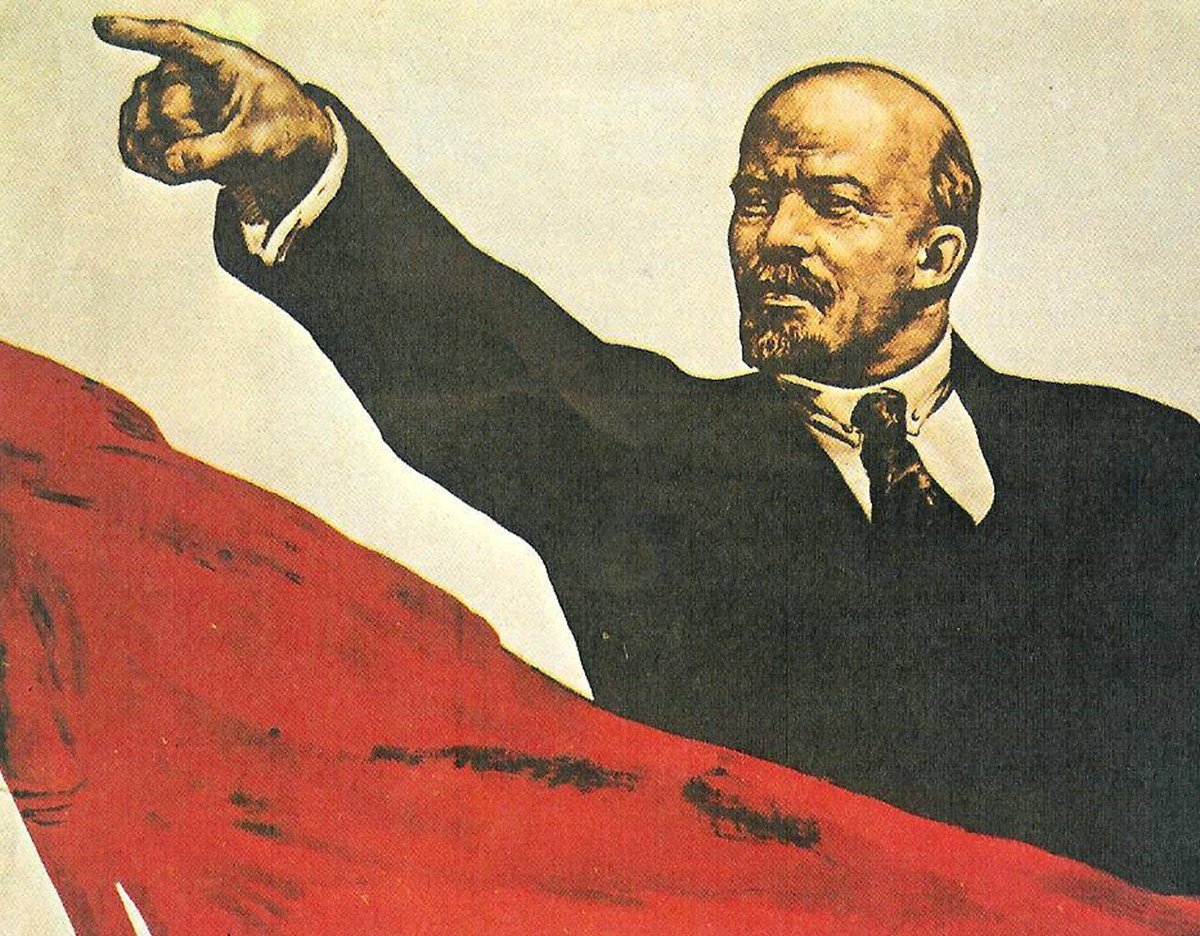
Are Americans becoming Sovietized?


Are Americans becoming Sovietized?

Victor Davis Hanson, Jewish World Review

What ultimately ended the nihilist Soviet system?

Was it not that Russians finally tired of the Kremlin's lies and hypocrisies that permeated every facet of their falsified lives?

Here are 10 symptoms of Sovietism. Ask yourself whether we are headed down this same road to perdition.

1. There was no escape from ideological indoctrination — anywhere. A job in the bureaucracy or a military assignment hinged not so much on merit, expertise or past achievement. What mattered was loud enthusiasm for the Soviet system.

Wokeness is becoming our new Soviet-like state religion. Careerists assert that America was always and still is a systemically racist country, without ever producing proof or a sustained argument.

2. The Soviets fused their press with the government. Pravda, or "Truth," was the official megaphone of state-sanctioned lies. Journalists simply regurgitated the talking points of their Communist Party partners.

In 2017, a Harvard study found that over 90% of the major TV news networks' coverage of the Trump administration's first 100 days was negative.

3. The Soviet surveillance state enlisted apparatchiks and lackeys to ferret out ideological dissidents.

Recently, we learned that the Department of Defense is reviewing its rosters to spot extremist sentiments. The U.S. Postal Service recently admitted it uses tracking programs to monitor the social media postings of Americans.

CNN recently alleged that the Biden administration's Department of Homeland Security is considering partnering with private surveillance firms to get around government prohibitions on scrutinizing Americans' online activity.

4. The Soviet educational system sought not to enlighten but to indoctrinate young minds in proper government-approved thought.

Currently, cash-strapped universities nationwide are hiring thousands of diversity, equity and inclusion staffers and administrators. Their chief task is to scan the admissions, hiring, curriculum and administration at universities. Like good commissars, our diversity czars oversee compliance with the official narrative that a flawed America must confess, apologize for and renounce its evil foundations.

5. The Soviet Union was run by a pampered elite, exempt from the ramifications of their own radical ideologies.

Now, woke Silicon Valley billionaires talk socialistically but live royally. Coke and Delta Airlines CEOs who hector Americans about their illiberality make millions of dollars a year.

What unites current woke activists such as Oprah Winfrey, LeBron James Mark Zuckerberg and the Obamas are their huge estates and their multimillion-dollar wealth. Just as the select few of the old Soviet nomenklatura had their Black Sea dachas, America's loudest top-down revolutionaries prefer living in Martha's Vineyard, Beverly Hills, Montecito and Malibu.

Sign up for the daily JWR update. It's free. Just click here.

6. The Soviets mastered Trotskyization, or the rewriting and airbrushing away of history to fabricate present reality.

Are Americans any different when they indulge in a frenzy of name-changing, statue-toppling, monument-defacing, book-banning and cancel-culturing?

7. The Soviets created a climate of fear and rewarded stool pigeons for rooting out all potential enemies of the people.

Since when did Americans encourage co-workers to turn in others for an ill-considered word in a private conversation? Why do thousands now scour the internet to find any past incorrect expression of a rival? Why are there now new thought criminals supposedly guilty of climate racism, immigration racism or vaccination racism?

8. Soviet prosecutors and courts were weaponized according to ideology.

In America, where and for what reason you riot determines whether you face any legal consequences. Politically correct sanctuary cities defy the law with impunity. Jury members are terrified of being doxxed and hunted down for an incorrect verdict. The CIA and FBI are becoming as ideological as the old KGB.

9. The Soviets doled out prizes on the basis of correct Soviet thought.

In modern America, the Pulitzer Prizes and the Emmys, Grammys, Tonys and Oscars don't necessarily reflect the year's best work, but often the most politically correct work from the most woke.

10. The Soviets offered no apologies for extinguishing freedom. Instead, they boasted that they were advocates for equity, champions of the underclass, enemies of privilege — and therefore could terminate anyone or anything they pleased.

Our wokists are similarly defending their thought-control efforts, forced re-education sessions, scripted confessionals, mandatory apologies and cancel culture on the pretense that we need long-overdue "fundamental transformation."

So if they destroy people in the name of equity, their nihilism is justified.