Thursday, November 10, 2016

A ‘Dewey Defeats Truman’ Lesson for the Digital Age


A ‘Dewey Defeats Truman’ Lesson for the Digital Age
Jim Rutenberg, Mediator, The New York Times

All the dazzling technology, the big data and the sophisticated modeling that American newsrooms bring to the fundamentally human endeavor of presidential politics could not save American journalism from yet again being behind the story, behind the rest of the country.

The news media by and large missed what was happening all around it, and it was the story of a lifetime. The numbers weren’t just a poor guide for election night — they were an off-ramp away from what was actually happening.

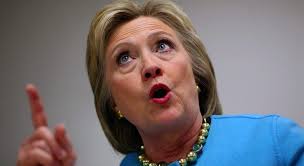
No one predicted a night like this — that Donald J. Trump would pull off a stunning upset over Hillary Clinton and win the presidency.

The misfire on Tuesday night was about a lot more than a failure in polling. It was a failure to capture the boiling anger of a large portion of the American electorate that feels left behind by a selective recovery, betrayed by trade deals that they see as threats to their jobs and disrespected by establishment Washington, Wall Street and the mainstream media.

Journalists didn’t question the polling data when it confirmed their gut feeling that Mr. Trump could never in a million years pull it off. They portrayed Trump supporters who still believed he had a shot as being out of touch with reality. In the end, it was the other way around.

It was just a few months ago that so much of the European media failed to foresee the vote in Britain to leave the European Union. Election 2016, thy name is Brexit.
Election Day had been preceded by more than a month of declarations that the race was close but essentially over. And that assessment held even after the late-October news that the Federal Bureau of Investigation was reviewing a new batch of emails related to Mrs. Clinton’s private server.

Mrs. Clinton’s victory would be “substantial but not overwhelming,” The Huffington Post had reported, after assuring its readers that “she’s got this.” That more or less comported with The New York Times’s Upshot projection early Tuesday evening that Mrs. Clinton was an 84 percent favorite to win the presidency.

Then came a profound shift, as mainstream media organizations scrambled to catch the bus that had just run them over. By 10:30 p.m., the Upshot projection had switched around, remarkably, to 93 percent in favor of Mr. Trump.

Other major sites also flipped from a likely Clinton victory to a likely Trump victory. John King of CNN proclaimed to his huge election night audience that during the previous couple of weeks, “We were not having a reality-based conversation” given the map he had before him, showing Mr. Trump with a clear opportunity to reach the White House.

That was an extraordinary admission; if the news media failed to present a reality-based political scenario, then it failed in performing its most fundamental function.
The unexpected turn in the election tallies immediately raised questions about the value of modern polling: Can it accurately capture public opinion when so many people are now so hard to reach on their unlisted cellphones?

“I think the polling was a mess,” Stanley Greenberg, a Democratic pollster, told me Tuesday night. “But I think a lot of it was interpretation of the polls.”

Mike Murphy, a Republican strategist, said on MSNBC, “My crystal ball has been shattered into atoms’’ because he predicted the opposite outcome. “Tonight data died,’’ he added.

Regardless of the outcome, it was clear that the polls, and the projections, had underestimated the strength of Mr. Trump’s vote, and the movement he built, which has defied all predictions and expectations since he announced his candidacy last year.

And that’s why the problem that surfaced on Tuesday night was much bigger than polling. It was clear that something was fundamentally broken in journalism, which has been unable to keep up with the anti-establishment mood that is turning the world upside down.

Politics is not just about numbers; data can’t always capture the human condition that is the blood of American politics. And it is not the sole function of political reporting to tell you who will win or who will lose. But that question — the horse race — has too often shadowed everything else, and inevitably colors other reporting, too.

You have to wonder how different the coverage might have been had the polls, and the data crunching, not forecast an almost certain Clinton victory. Perhaps there would have been a deeper exploration of the forces that were propelling Mr. Trump toward victory, given that so much of his behavior would have torpedoed any candidate who came before him.

Maybe we’d know a lot more about how Mr. Trump’s plan to build a wall along the southern border would fare in Congress, or what his proposal to make it easier to sue journalists might actually look like. How about his plan to block people from countries with links to terrorism?

Then there was the drop in the global stock market on Tuesday night, which wasn’t just figures on a screen but wealth being erased. The expectations were out of whack, and Wall Street doesn’t do out-of-whack well.

What’s amazing is how many times the news media has missed the populist movements that have been rocking national politics since at least 2008. It failed to initially see the rise of the Tea Party, which led to the Republican wave of elections of 2010 and 2014, which was supposed to be the year the so-called Republican establishment regained control over its intraparty insurgency.

Then, of course, there was Mr. Trump’s own unexpected rise to the nomination. And after each failure came a vow to learn lessons, and not ever allow it to happen again. And yet the lessons did not come fast enough to get it right when it most mattered.

In an earlier column, I quoted the conservative writer Rod Dreher as saying that most journalists were blind to their own “bigotry against conservative religion, bigotry against rural folks, and bigotry against working class and poor white people.”

Whatever the election result, you’re going to hear a lot from news executives about how they need to send their reporters out into the heart of the country, to better understand its citizenry.

But that will miss something fundamental. Flyover country isn’t a place, it’s a state of mind — it’s in parts of Long Island and Queens, much of Staten Island, certain neighborhoods of Miami or even Chicago. And, yes, it largely — but hardly exclusively — pertains to working-class white people.

They think something is so wrong that all the fact-checking of Mr. Trump this year, the countless reports of his lies — which he uttered more than Mrs. Clinton did — and the vigorous investigation of his business and personal transgressions, bothered them far less than the perceived national ills Mr. Trump was pointing to and promising to fix.

In their view the government was broken, the economic system was broken, and, we heard so often, the news media was broken, too. Well, something surely is broken. It can be fixed, but let’s get to it once and for all.


Monday, November 07, 2016

THE LEFT’S IMPULSE TO BULLY IS UNIVERSAL


THE LEFT’S IMPULSE TO BULLY IS UNIVERSAL
John Hinderer, Powerline

It is widely understood that the Left wants to impose censorship on the rest of us, and where it can, it will. The experience of conservative speakers on university campuses is the most obvious proof. But the truth, I think, is worse: it isn’t just censorship. The Left wants to bully disagreement out of existence.

Hence the astonishingly long list of acts of political violence and low-level terrorism that have been carried out by members of the Democratic Party against Donald Trump supporters and Republicans in the current election cycle.

In Europe, the Left’s eliminationist impulse is most often vented against those who disagree with the policy of mass immigration from non-European countries. A striking example has just occurred in Sweden, where the Sweden Democrats hosted, on Friday, an event at which they awarded a prize–the European Freedom Award–to former Czech President Vaclav Klaus. The event took place at Stockholm’s renowned Grand Hotel. It prompted a chorus of outrage against the “far right.”


Stockholm’s Grand Hotel has issued an unprecedented public apology for hosting an awards ceremony for European right-wing politicians, following a storm of angry protest. 
The anti-immigration Sweden Democrats party hired the upmarket hotel, which boasts views over the Royal Palace and Gamla Stan, for its “European Freedom Awards” on Friday evening.
As soon as the news became public, the hotel faced a storm of angry protests on Twitter, with thousands protesting by giving it one-star reviews on its Facebook page. Meanwhile, hotel staff gave anonymous interviews criticising the event, and several customers cancelled event contracts.

So who are the outrageous “far right” figures that brought about this storm of protest?


On Friday, the hotel was still defending its decision to host the awards, which included speeches by Nigel Farage, the unofficial leader of the campaign to bring Britain out of the European Union…

Brexit won. If Brexit is the knock on Farage, it is a majority view, not a “far right” fringe position.


…and Jimmie Åkesson, the leader of the Sweden Democrats.

In the 2014 election, the Sweden Democrats won 49 of the 349 seats in the Swedish Riksdag. As of June, the Democrats polled as the most popular party in Sweden.


The award, styled as an “alternative Nobel”, was won by the Czech politician Václav Klaus.

Klaus, an economist, is by far the most popular Czech politician since that country became independent. He served as President of the Czech Republic from 2003 to 2013, having been Prime Minister from 1993 to 1998. Klaus’s supposed sins include skepticism toward catastrophic anthropogenic global warming (he is right about that, based on the science) and toward the European Union–a view that he shares with a large and growing number of Europeans.

Nevertheless, the Left’s bullying tactics were too much for the Grand Hotel:


In the press release, the hotel’s chief executive Pia Djupmark claimed that managers had tried to wriggle out of hosting the event as far back as seven weeks ago, but had been unable to do so due to the contract they had signed.
“One of the most difficult things about all of this is that so many people thought that we didn’t understand, that we had no moral compass whatsoever,” she said. “Breaking a contract is a big step, and we decided to stick with our tradition of fair-dealing, that a contract should not be broken. In this case, we should have broken it.”
The hotel claimed that this was the first time in its near 150-year history that it had made a public comment on any of its guests.
“We have always wanted to be a neutral meeting place that does not judge our guests or their opinions and use that to decide whether they are welcome or not,” it said. “At the same time, there is a limit.”

Heh. The limit is reached, apparently, when you disagree with Europe’s left-wing elites, regardless of how widely your views may be shared by the population at large.

Here in the U.S., we are witnessing a populist revolt against bullying liberalism, but what we are seeing here is mild, I suspect, compared with what is in store in Europe. And, of course, when all dissent on what millions see as the most vital issues of the day is barred as “far right,” it is inevitable that unsavory elements will be part of the populist uprising. Having sown the wind, Europe’s Left will, in all likelihood, reap the whirlwind. If the consequences are not to its liking, it has no one to blame but itself.


Col Walker added:

Yeah, divisive persecution and intimidation under the Orwellian doublespeak slogan of "Stronger Together."

Monday, October 31, 2016

A President Clinton would be out of control


A President Clinton would be out of control
Glenn Reynolds, USA Today

He's no paragon of virtue, but it won’t be that way with a President Trump.

“Someone somewhere should have told her no.” Those are the words of a Clinton ally quoted in a roundup of Democratic reactions to Hillary Clinton’s FBI news by congressional newspaper The Hill. And, despite the fact that they come from a Clinton supporter, albeit an angry and disappointed one, they may illustrate the best reason for choosing Donald Trump instead of Clinton.
Here’s the full quote:

“I'm livid, actually. . . .This has turned into malpractice. It's an unforced error at this point. I have no idea what Comey is up to but the idea this email issue is popping back up again is outrageous. It never should have occurred in the first place. Someone somewhere should have told her no. And they didn't and now we're all paying the price.”

Someone, somewhere, should have told her no. Well, yes. But who? That was the problem with Secretary of State Clinton, and it will be a bigger problem with a President Clinton. Because, by all appearances, nobody tells Clinton no, and Clinton has no compunction about breaking the rules when it suits her purposes.

Thus the Clinton Foundation became a global money-laundering and influence-peddling organization without precedent in American history. Donors to the foundation were encouraged to steer money to what one employee called “Bill Clinton, Inc.,” and later to Clinton. State Department personnel did favors for people who donated money to the Foundation. And to make sure that nobody found out what was going on, Clinton ran her own homebrew server operation designed to ensure that Freedom of Information Act requests turned up nothing — and even President Obama, rather than saying no, went along, sending her emails at her non-government address under a fake name.

Someone somewhere should have told her no. But if the president wasn’t going to tell her no, who would? Staff at the State Department? They might have been willing to tell some other secretary of state no, but Clinton? Too risky, it seems. They certainly went along without visible objection, and without even leaks.

The press? When The New York Times reported Clinton’s secret, illegal server, Politico’s Glenn Thrush, far from condemning it, called it “badass.”

Congress? Clinton has stonewalled and run rings around numerous committees investigating her. Besides, Congress had already told her no, in the form of statutes governing the treatment of government communications and classified information. She just ignored those rules and did what she wanted. Hotel magnate Leona Helmsley famously said that “only little people pay taxes.” Clinton seems to feel the same way about obeying laws.

It won’t be that way with a President Trump. This isn’t because Trump is any less arrogant than Clinton (though it would be hard to be more arrogant). It’s because more people will be willing to tell Trump no. The civil service, which leans overwhelmingly Democratic, won’t be bending over backwards to do his will. The press can’t stand him. And the Congress, even if controlled by the GOP, won’t support him if he misbehaves because so many Republicans dislike him, too.

The truth is, neither one of our leading candidates for president is a paragon of virtue. But only one of them has already made a habit of flouting the law while in office, selling favors and escaping the consequences, and only one of them is likely to be able to pull it off from the White House.

And that’s the problem. If Secretary of State Clinton, serving under a president and with an eye on winning a second term in the White House, wasn’t constrained by the rules, who will constrain her if she’s president?

The answer, most likely, is nobody. And, once again, we’ll all be paying the price.


Glenn Harlan Reynolds, a University of Tennessee law professor and the author of The New School: How the Information Age Will Save American Education from Itself, is a member of USA TODAY's Board of Contributors.

Saturday, October 29, 2016

Clinton and the FBI: Comey Got It Right... redux


Clinton and the FBI: Comey Got It Right... redux
Mike Walker, Col (USMC)

All,

Below is what I wrote in July and once again this will leave me with few if any friends.

The FBI and Comey got it right both in July and in October. They are right in now reopening the investigation. They have only one duty to the American people: Follow the facts honestly and determinedly.

The truth will out.

Mike (October 28)

and.....

 All,

Here is another email that will leave me with few if any friends.

FBI Director Comey got it right when he did not recommend criminal charges against Hillary Clinton and her aides.

After three decades of having access to classified information, I do not know of anyone who mishandled classified information and went to prison absent criminal intent.

It is equally true that I know of no one who was found to have been careless with classified information who did not suffer significant consequences.

If I or any of the people I worked with became the subject of an FBI investigation that concluded that any of us had been extremely careless in handling highly classified information – as the FBI determined in the case of Clinton and her aides – then our careers would have come to a dead stop.

We soon (if not immediately) would be out of a job.  We would never again hold a position requiring access to classified information.  We would leave the service in disgrace.

And therein lies the rub. 

If Hillary Clinton is elected President then she will regain access to the fullest possible spectrum of classified information. I can swallow hard and accept that as the will of the American people.

What I would find poisonous to honest governance is the idea that her aides would suffer no consequences if Clinton wanted them to regain their security clearances so they could reenter Government service.

If any average American did what her aides did – were extremely careless with highly classified information – then… Yes, they would not go to prison and… Yes, their days of having access to classified information – in or out of government – would be over.

Will that happen? Is the game rigged in favor of the elites? Do only the little guys get hammered? Is the system corrupt?

Mike (July 5)

Sunday, October 16, 2016

Strategic Implications of Houthi missile strikes at US Navy ships


Strategic Implications of Houthi missile strikes at US Navy ships
Mike Walker, Col USMC (retired)

All,

Some are characterizing the firing of Iranian-supplied missiles by Houthi rebels at US warships in the Gulf of Aden as a local affair tied to ongoing civil war in Yemen. That conclusion is both wishfully simplistic and wrong.

This is a tactical initiative supporting a far larger strategic vision. Yes, the Yemeni civil war is a surrogate war between Iran and Saudi Arabia but even that contest is part of a larger objective of the Islamic Republic to force the United States out of the region in order to facilitate Iranian hegemony over the Middle East.

If the Houthi’s successfully drive the U.S. Navy out of the Gulf of Aden, Iran will gain control over one of the world’s most important littoral sea lines of communication (SLOCs). It will also badly destabilize the Middle East as the Iranians are already seeking to drive the US Navy out of the Persian Gulf with its strategic passage at the Straits of Hormuz. 

Most of the world’s oil (about 65%) passes through these two SLOCs in combination with the overland pipelines. Iranian sea control over the Persian Gulf and the Gulf of Aden would place the existing flow of supplies at the mercy of Tehran as the pipeline network simply could not make up for the loss of the shipping volume. 

Add in the fact that the Syrian civil war has degraded the pipelines to the Mediterranean and another transverses Lebanon where Iran’s Hezbollah allies have the power to shut it down at will. Finally, if a pro-Islamic Republic regime (led by the likes of Mutaddah Sadr) took power in Iraq, the pipelines through Turkey would also fall under Iran’s control. 

If the Islamic Republic realizes those goals, America’s allies in the Arabian Peninsula only would be left with the two pipeline ports at Duqum, Oman, on the Arabian Sea and Saudi Arabia’s al Baha on the Red Sea. In other words, their oil-driven economies would be devastated.  Finally, the passage through the Gulf of Aden is far more than a key stretch of an oil-gas SLOC, it is a chokepoint for an economic sea lane of global importance. If Iran achieved these objectives then Tehran's message to the Arab states would be abundantly clear: Submit to the Islamic Republic or face economic ruin.

What this all means is that pushing the US Navy out of the Gulf of Aden is but one important part of the Islamic Republic of Iran’s long-term strategic plan and the plan’s ends are not primarily economic. They are principally political-military goals whose attainment must inevitably end in war -- as the flying Houthi missiles so amply demonstrate.

The stakes are truly great. 

Semper Fi,
Mike

From Yemen to Turtle Bay


From Yemen to Turtle Bay

Caroline Glick
Off the coast of Yemen and at the UN Security Council we are seeing the strategic endgame of Barack Obama’s administration. And it isn’t pretty.

Since Sunday, Iran’s Houthi proxies in Yemen have attacked US naval craft three times in the Bab al Mandab, the narrow straits at the mouth of the Red Sea. The Bab al Mandab controls maritime traffic in the Red Sea, and ultimately control the Suez Canal.

Whether the Iranians directed these assaults or simply greenlighted them is really beside the point. The point is that these are Iranian strikes on the US. The Houthis would never have exposed themselves to US military retaliation if they hadn’t been ordered to do so by their Iranian overlords.

The question is why has Iran chosen to open up an assault on the US?

The simple answer is that Iran has challenged US power at the mouth of the Red Sea because it believes that doing so advances its strategic aims in the region.

Iran’s game is clear enough. It wishes to replace the US as the regional hegemon, at the US’s expense.

Since Obama entered office nearly eight years ago, Iran’s record in advancing its aims has been of uninterrupted success.

Iran used the US withdrawal from Iraq as a means to exert its full control over the Iraqi government. It has used Obama’s strategic vertigo in Syria as a means to exert full control over the Assad regime and undertake the demographic transformation of Syria from a Sunni majority state to a Shiite plurality state.

In both cases, rather than oppose Iran’s power grabs, the Obama administration has welcomed them. As far as Obama is concerned, Iran is a partner, not an adversary. Since like the US, Iran opposes al Qaeda and ISIS, Obama argues that the US has nothing to fear from the fact that Iranian controlled Shiite militias are running the US-trained Iraqi military. So too, he has made clear, that the US is content to stand by as the mullahs become the face of Syria.

In Yemen, the US position has been more ambivalent. In late 2014, Houthi rebel forces took over the capital city of Sana’a. In March 2015, the Saudis led a Sunni campaign to overthrow the Houthi government. In a bid to secure Saudi support for the nuclear agreement it was negotiating with the Iranians, the Obama administration agreed to support the Saudi campaign. To this end, the US military has provided intelligence, command and control guidance and armaments to the Saudis.

Iran’s decision to openly assault US targets then amounts to a gamble on Tehran’s part that in the twilight of the Obama administration, the time is ripe to move in for the kill in Yemen. The Iranians are betting that at this point, with just three months to go in the White House, Obama will abandon the Saudis, and so transfer control over Arab oil to Iran. For with the Straits of Hormuz on the one hand, and the Bab al Mandab on the other, Iran will exercise effective control over all maritime oil flows from the Arab world.

It’s not a bad bet for the Iranians, given Obama’s consistent strategy in the Middle East.

Obama has never discussed that strategy. Indeed, he has deliberately concealed it. But to understand the game he has been playing all along, the only thing you need to do listen to his foreign policy soulmate.

According to a New York Times profile published in May, Obama’s deputy national security advisor Ben Rhodes is the president’s alter ego. The two men’s minds have “melded.”

Rhodes’s first foreign policy position came in the course of his work for former congressman Lee Hamilton.

In 2006, then president George W. Bush appointed former secretary of state James Baker and Hamilton to lead the Iraq Study Group. Bush tasked the ISG with offering a new strategy for winning the war in Iraq. The ISG released its report in late 2006.

The ISG’s report contained two basic recommendations. First, it called for the administration to abandon Iraq to the Iranians. The ISG argued that due to Iran’s opposition to al Qaeda, the Iranians would fight al Qaeda for the US.

The report’s second recommendation related to Israel. Baker, Hamilton and their colleagues argued that after turning Iraq over to Iran, the US would have to appease its Sunni allies.

The US, the ISG report argued, should simultaneously placate the Sunnis and convince the Iranians of its sincerity by sticking it to Israel. To this end, the US should pressure Israel to give the Golan Heights to Syria and give Judea and Samaria to the PLO.

Bush rejected the ISG report. Instead he opted to win the war in Iraq by adopting the surge counterinsurgency strategy.

But once Bush was gone, and Rhodes’ intellectual twin replaced him, the ISG recommendations became the unstated US strategy in the Middle East.

After taking office, Obama insisted that the US’s only enemy was al Qaeda. In 2014, Obama grudgingly expanded the list to include ISIS.

Obama has consistently justified empowering Iran in Iraq and Syria on the basis of this narrow definition of US enemies. Since Iran is also opposed to ISIS and al Qaeda, the US can leave the job of defeating them both to the Iranians, he has argued.

Obviously, Iran won’t do the US’s dirty work for free. So Obama has paid the mullahs off by giving them an open road to nuclear weapons through his nuclear deal, by abandoning sanctions against them, and by turning his back on their ballistic missile development.

Obama has also said nothing about the atrocities that Iranian controlled militia have carried out against Sunnis in Iraq and has stopped operations against Hezbollah.
  
As for Israel, since his first days in office, Obama has been advancing the ISG’s recommendations. His consistent, and ever escalating condemnations of Israel, his repeated moves to pick fights with Jerusalem are all of a piece with the ISG’s recommended course of action. And there is every reason to believe that Obama intends to make good on his threats to cause an open rupture in the US alliance with Israel in his final days in office.

Prime Minister Benjamin Netanyahu’s phone call with Secretary of State John Kerry Saturday night made this clear enough. In the course of their conversation, Netanyahu reportedly asked Kerry if Obama intended to enable an anti-Israel resolution to pass in the UN Security Council after the presidential elections next month. By refusing to rule out the possibility, Kerry all but admitted that this is in fact Obama’s intention.

And this brings us back to Iran’s assaults on US ships along the coast of Yemen.

Early Sunday morning, the US responded to the Houthi/Iranian missile assaults by attacking three radar stations in Houthi controlled territory. The nature of the US moves gives credence to the fear that the US will surrender Yemen to Iran.

This is so for three reasons. First, the administration did not allow the USS Mason to respond to the sources of the missile attack against it immediately. Instead, the response was delayed until Obama himself could determine how best to “send a message.” That is, he denied US forces the right to defend themselves.

Second, it is far from clear that destroying the radar stations will inhibit the Houthis/Iranians. It is not apparent that radar stations are necessary for them to continue to assault US naval craft operating in the area.
  
Finally, the State Department responded to the attack by reaching out to the Houthis. In other words, the administration is continuing to view the Iranian proxy is a legitimate actor rather than an enemy despite its unprovoked missile assaults on the US navy.
  
Then there is the New York Times’ position on Yemen.
  
The Times has repeatedly allowed the administration to use it as an advocate of policies the administration itself wishes to adopt. Last week for instance, the Times called for the US to turn on Israel at the Security Council.

Tuesday, the Times’ published an editorial calling for the administration to end its military support for the Saudi campaign against the Houthis/Iran in Yemen.

Whereas the Iranian strategy makes sense, Obama’s strategy is nothing less than disastrous. Although the ISG, like Obama are right that Iran also opposes ISIS, and to a degree, al Qaeda, they both ignored the hard reality that Iran also views the US as its enemy. Indeed, the regime’s entire identity is tied up in its hatred for the US and its strategic aim of destroying America.

Obama is not the only US president who has sought to convince the Iranians to abandon their hatred for America. Every president since 1979 has tried to convince the mullahs to abandon their hostility. And just like all of his predecessors, Obama has failed to convince them.

What distinguishes Obama from his predecessors is that he has based US policy on a deliberate denial of the basic reality of Iranian hostility. Not surprisingly, the Iranians have returned his favor by escalating their aggression against America.

The worst part about Obama’s strategy is that it is far from clear that his successor will be able to improve the situation.

If Hillary Clinton succeeds him, his successor is unlikely to even try. Not only has Clinton embraced Obama’s policies towards Iran. Her senior advisors are almost all Obama administration alumni. Wendy Sherman the leading candidate to serve as her secretary of state was Obama’s chief negotiator with the Iranians.

If Donald Trump triumphs next month, assuming he wishes to reassert US power in the region, he won’t have an easy time undoing the damage that Obama has caused.

Time has not stood still as the US has engaged in strategic dementia. Not only has Iran been massively empowered, Russia has entered the Middle East as a strategic spoiler.

Moreover, since 2001, the US has spent more than a trillion dollars on its failed wars in the Middle East. That investment came in lieu of spending on weapons development. Today Russia’s S-400 anti-aircraft missiles in Syria reportedly neutralize the US’s air force.

US naval craft in the Bab el Mandab have little means to defend themselves against missile strikes.

The US’s trillion dollar investment in the F-35 has tethered its air wings to a plane that has yet to prove its capabilities, and may never live up to expectations.

Israel is reasonably worried about the implications of Obama’s intention to harm it at the UN. But the harm Israel will absorb at the UN is nothing in comparison to the long-term damage of Obama’s embrace of the ISG’s disastrous strategic framework has and will continue to cause Israel, the US and the entire Middle East.


Friday, October 14, 2016

Lowering Stress during the Election Madness


Lowering Stress during the Election Madness
Col Mike Walker, USMC (retired)


All,

There is a great way to relax a bit when the election madness gets too much:

Watch marathon episodes of the TV series on air plane crashes on the Smithsonian Channel.

It is a less stressful change of pace.

Semper Fi,
Mike

Tuesday, October 04, 2016

Please Tell Me These FBI/DOJ ‘Side Deals’ with Clinton E-Mail Suspects Didn’t Happen


Please Tell Me These FBI/DOJ ‘Side Deals’ with Clinton E-Mail Suspects Didn’t Happen 
by ANDREW C. MCCARTHY , National Review

The ‘side deals’ are further evidence of a highly politicized Obama Department of Justice.

Just when you think it can’t get any worse . . .  

According to House Judiciary Committee chairman Bob Goodlatte (R., Va.), the immunity agreements struck by the Justice Department with Cheryl Mills and Heather Samuelson, two top subjects of the FBI’s Clinton e-mail investigation, included “side agreements.” Pursuant to these side agreements, it was stipulated that (a) the FBI would not scrutinize any documents dated after January 31, 2015 (i.e., about five weeks before the most disturbing actions suggestive of obstruction of justice occurred); and (b) the FBI — in an investigation critically involving destruction of documents — would destroy the computers after conducting its search.

These revelations are outlined in a letter Chairman Goodlatte penned yesterday to Attorney General Loretta Lynch. Goodlatte says his committee learned of the side deals upon reviewing the immunity agreements, which have not been made public.

That review naturally prompted a demand by the committee to see the side deals, which — for reasons unexplained — the Justice Department elected not to provide when it gave the committee access to the immunity agreements. The side deals have also not been made public.

For anyone who worked in the Justice Department for any length of time, the striking of side deals with a defense lawyer (in this instance, Beth Wilkinson, who represents both Ms. Mills and Ms. Samuelson) is bracing. Written agreements with the Justice Department (regarding, for example, guilty pleas and cooperation) customarily include a clause explaining that the four corners of the document contain the entirety of the understandings between the parties. This is done precisely because defendants often claim they were enticed into signing the agreement because of this or that side deal purportedly agreed to by the government. The Justice Department likes to be able to say, “We don’t engage in those sorts of shenanigans. The agreement is the single agreement as written.” Why did the Justice Department make side deals in this case (which we’ve been told was treated like any other case . . . except, alas, when it wasn’t)? 

More fundamentally, as I’ve been arguing since we learned of the immunity agreements, why did the government grant immunity in the first place? Unfortunately, the question, at this point, is rhetorical. Immunity was granted because the Justice Department would not use the grand jury against Mrs. Clinton. 

As I’ve explained, the computers were physical evidence. The law empowers the government to compel production of physical evidence by subpoena (or by search warrant if there is suspicion that the evidence will be tampered with or destroyed). Importantly, however, the power to compel production of evidence derives from the grand jury. In the Clinton e-mails case, unlike virtually every other criminal case, the Justice Department apparently declined to convert the FBI’s investigation into a grand-jury investigation. This meant grand-jury subpoenas would not be issued.

Why? 

Patently, the highly politicized Obama Justice Department did this because commencing a grand-jury investigation suggests that a matter is very serious and an indictment (which only the grand jury can issue) is likely. In this case, the Justice Department was determined to maintain the illusion that Clinton and her underlings hadn’t committed crimes, so the grand jury was avoided. That is how you end up with such inanities as the Justice Department’s leaking to the Washington Post that Cheryl Mills was regarded as nothing more than a very cooperative witness, not a suspect, even though we now know that (a) Mills falsely denied that, while serving as then-secretary of state Clinton’s chief of staff, she knew about the homebrew server system; (b) the evidence indicates that Mills is the one who directed Platte River Networks (PRN) to destroy the e-mails stored on Clinton’s server (although there are salient questions about when this happened); (c) the private laptop Mills used to vet Clinton’s e-mails contained mounds of classified information; and (d) Mills was sufficiently worried that her lawyer sought — and obtained — immunity from prosecution before Mills surrendered her computer to the FBI.

The Justice Department was determined to maintain the illusion that Clinton and her underlings hadn’t committed crimes. In his House testimony last week, FBI director James Comey tried to deflect the government’s failure to use the grand jury by rationalizing that the FBI was very anxious to examine the Mills and Samuelson computers, and that it is often more efficient in a criminal investigation to make informal agreements with the subjects’ lawyers than to rely on grand-jury compulsion. As I countered in this past weekend’s column, this claim is unconvincing. Use of the grand jury and negotiations with defense lawyers are not mutually exclusive. They happen concurrently all the time. Indeed, it is fear that the government might resort to compulsion that induces defense lawyers to negotiate reasonably. Take the grand jury off the table and investigators are apt to get taken to the cleaners.

That is what happened here. With no resort to the grand jury, the FBI was reduced to relying on the Justice Department, which was working closely with Team Clinton’s defense lawyers, to cut immunity deals. These deals gave away the store in exchange for physical evidence the government actually had the power to demand without making concessions, much less extraordinary concessions like immunizing Mills and Samuelson from any prosecution based on the contents of the computers. 

According to Goodlatte, those concessions were even more astonishing than they seemed at first blush because of the newly revealed side deals. 

 First, there is the time-restriction. As noted above, Goodlatte says the Justice Department agreed that the FBI’s investigative team would not inspect any documents on the laptops dated later than January 31, 2015. What conceivable justification is there for this limitation? It is quite easy to conjure relevant evidence post-dating January 31, 2015, that could have been on the computer. Let’s just consider the crucial events of March 2015:

• In early March 2015, the New York Times broke the story about Mrs. Clinton’s homebrew server. 

• The House Benghazi committee quickly issued a subpoena for Clinton’s e-mails.

• Between the Times report and March 25, Mills (and perhaps other Clinton-related lawyers and staffers) had a number of communications with Paul Combetta, the PRN technician who ultimately destroyed the e-mails. 

• According to a March 25 e-mail, there was a call that day between Combetta and unidentified Clinton personnel as to which Combetta told the FBI “he could not recall the content of the call or the reference to backups in the e-mail.” (Scroll to Combetta FBI interview, May 3, 2016, p.5.) 

• Nevertheless, sometime on or after March 25, Combetta had his “‘oh shit’ moment” and deleted the files containing Clinton’s e-mails from the server. (Same Combetta interview, pp.5-6.) 

• On March 27, Clinton’s principal lawyer David Kendall informed Benghazi Committee chairman Trey Gowdy (R., S.C.) by letter: “I have confirmed with the Secretary’s IT support that no emails from [Clinton’s private e-mail address] for the time period [of Clinton’s 2009-2013 tenure as secretary of state] reside on the server or on any back-up systems associated with the server.” Kendall made no mention of when the “IT support” (Combetta) may have removed the e-mails. 

• A PRN work ticket dated March 31, 2015, references a conference call between Combetta, Kendall, and Mills, but when the FBI asked about it, Combetta refused to answer, citing his Fifth Amendment privilege against self-incrimination. (Scroll to Combetta FBI interview, February 18, 2016, p.5.) 

• On March 31, Combetta used the BleachBit program to “shred” any copies of Clinton e-mails remaining on the server. (May 3, 2016, Combetta interview, p.6). 

Combetta was obviously in contact with Mills and other Clinton team members from early February through the end of March 2015 — the period the FBI was barred from examining under the computer side deal. Combetta tells the highly unlikely story that, during this time frame, he destroyed Clinton’s e-mails on his own initiative, without any encouragement from Mills or others in the Clinton camp. Why would the FBI agree to destroy the computers? 

When asked during last week’s House hearing how he could believe Combetta, FBI director Comey pointedly replied that it was not a matter of believing Combetta; the problem was not having evidence that disproved Combetta’s story. So if the FBI was interested in finding such evidence, why would it agree (or at least abide the Justice Department’s agreement) to an arrangement under which it was denied the ability to review documents on Mills’s computer from March 2015, when Combetta, while in frequent communication with Mills, destroyed the e-mails? 

Finally (at least until the next shoe drops), why would the FBI agree to destroy the computers after conducting the (apparently highly limited) examination that was agreed to? The Federal Rules of Criminal Procedure explicitly provide (in Rule 41) that, when the government has taken custody of property for investigative purposes, a person who is somehow aggrieved by this deprivation may petition the court for the return of that property. The rule empowers the court to order the return of the property if it is not relevant to an ongoing investigation; and, if the court grants such relief, it “may impose reasonable conditions to protect access to the property and its use in later proceedings.” 

That is, the law encourages the preservation of materials that may have future investigative relevance. By simply following the law, the FBI and Justice Department can ensure that, if evidence is improperly destroyed, the government will not be at fault. 

If Cheryl Mills and Heather Samuelson were bent on destroying potential evidence, that is a highly disturbing risk they should have been made to run on their own. No good could come from the FBI’s participating in the destruction. We are not talking here about illegal narcotics or explosives — items that could be dangerous to the public if needlessly preserved after their investigative relevance has been exhausted. We’re talking about laptop computers. Even if the FBI and Justice Department truly were convinced (against what appears to be the weight of the evidence) that there is no prosecutable case against anyone in the Clinton e-mail scandal, it is always possible that new information could emerge that would revive the case. Under such circumstances, the computers could have had renewed relevance and their destruction would have been highly problematic. How would it help the FBI to have had a hand in that? 

Moreover, as the FBI and the Justice Department well knew, Clinton’s private e-mails are the subject of congressional oversight inquiries and Freedom of Information Act claims against the government that are being litigated in federal court. Again, why under those circumstances would the Justice Department and FBI agree not only that the evidence should be destroyed but, reportedly, that the FBI itself would do the destroying? 

We are repeatedly told that Mrs. Clinton and her underlings were not given special treatment, that this investigation was handled like any other. Are there other cases in which the Justice Department and FBI make such agreements? 


— Andrew C. McCarthy is a senior policy fellow at the National Review Institute and a contributing editor of National Review.