Friday, September 13, 2013

Syria and Bouncing Back

Kerry said what?

Syria and Bouncing Back
Mike Walker, Col. USMC (retired)

All,

To state the obvious, probably no one can or wants to put together a history of the Administration’s Syria policy over the last four plus years (if there really was one).

And following our policy over the last few weeks has been like riding a rollercoaster in the proverbial s--- storm.

Nonetheless, the clock keeps ticking, the problems are not going away and, as the old saying goes, its time to pick ourselves up and get back in the game.

The first step is getting back to a coherent policy of “saying what we mean and meaning what we say.”

In addition to ending on-the-fly “stream of consciousness” strategy development, it means convincing Assad and his minions that we will use force if necessary. That was a credible position for the United States as recently as late August but is no long true.

We need to make it clear to friend and foe alike that we are back from summer vacation, we are serious, and we intend to start acting instead of reacting.

The next step is to kill the big lie being boosted by Putin and Assad that they are seeking a non-military NEGOTIATED settlement.

The truth is that the Syrian civil war is going on without abatement because Assad and Putin feel a military victory is within their grasp.

Their definition of “negotiations” is talking to us as a diversion while killing as many as possible in Syria.

That is unacceptable and leads to the next step.

If all parties are truly seeking a non-military negotiated settlement then an IMMEDIATE CEASEFIRE must be a precondition for further negotiations.

 As for the WMD, Assad needs to immediately:

(1) Cease and desist from dispersing the WMD.

(2) Begin to concentrate the WMD at specified locations and prepare them for transport out of Syria under the supervision of the international community.

Finally, the idea that the West should stop supporting the resistance is feasible but ONLY as part of a global settlement: Both Assad and the resistance immediately end obtaining any and all forms of military assistance from any outside source.

In case Bashar is still tone deaf, that means no military support from Russia, Iran, Hezbollah, or anyone else. Why not throw in a condition that all Iranian and Hezbollah fighters are to be given 96 hours to leave the country.

Let us see how Vlad "The Peaceful" Putin and Jolly Old Bashar likes them apples.

I feel better already.

Mike

Tuesday, September 10, 2013

Putin is the one who really deserves that Nobel Peace Prize


You can't dispute Putin's tendency to be a leader, you don't have to like his programs, but he LEADS... well, like a Marshall Dillon from the steppes with a Kalisnakov. BH

Putin is the one who really deserves that Nobel Peace Prize

KT McFarland, Foxnews

In one of the most deft diplomatic maneuvers of all time, Russia’s President Putin has saved the world from near-certain disaster. He did so without the egoistical but incompetent American president, or his earnest but clueless Secretary of State, even realizing they had been offered a way out of the mess they’d created.

The eventful day started out Monday morning with the Obama administration making a full court press  for an American attack on Syria: lobbying members of Congress, scheduling an historic series of presidential interviews with top news anchors, and sending Secretary Kerry to London to persuade our reluctant allies to scramble their jets, too.  

Then Secretary Kerry made an off-hand comment that the only way an American attack would be called off is if the Syrians turn over all their chemical weapons to an international body.  Then he added, “but that isn’t going to happen.”

The words were hardly out of his mouth when Russian Foreign Minister Lavrov essentially said, "we can live with that," and the Syrian Foreign Minister chimed in with "we can, too."  

Meanwhile, the State Department  dismissed it, saying Kerry didn’t really mean what he said, it was just a "rhetorical" answer to a hypothetical question.  

It was as if Team Obama couldn’t take "yes" for an answer.

So, in stepped former Secretary Clinton, looking like the only adult in the room, to say that the Kerry Proposal made sense.  

Well,  that got Team Obama’s attention!  

The president, never one to let a crisis go to waste, told journalists that the proposal was something he and Putin had discussed at the G-20 Summit last week. 

By Tuesday night’s speech President Obama will surely be taking full credit, saying the Syrians and Russians caved only because Obama drew the "red line" a year ago, and threatened military action against Syria.  

So in 24 hours an off-hand phrase  was picked up by Putin, became a Kerry Proposal and ultimately  the Obama Peace plan, proving once again the Washington dictum that "success has many fathers."

The fact is Obama seemed headed for an attack on Syria that no one wanted and few thought would succeed.  Most thought it would only end in disaster, either with the U.S. drawn into an attack/retaliation cycle of escalation that could go on for years and spread into a regional war, or result in the overthrow of President Assad by an Al Qaeda affiliated rebels.  

While the Russians may have toyed with the idea of letting American get bogged down in yet another losing Middle East war, they didn’t want to risk a war that might pull them in, or lose control of the Assad government to radical Sunni jihadists.

So Putin stepped in and threw Obama a lifeline. 

For a few hours it seemed Obama might not grab at it.  But he  has, and will no doubt claim full credit for it being his idea all along.  

The Washington press corps will no doubt believe him, as usual, and lavish their usual praise.  

But the world knows that Vladimir Putin is the one who really deserves that Nobel Peace Prize.  

It turns out that leading from behind left a big opening up front. Putin stepped right in.  And Obama still hasn't figured it out.

Kathleen Troia "K.T." McFarland is a Fox News National Security Analyst and host of FoxNews.com's "DefCon 3." She served in national security posts in the Nixon, Ford and Reagan administrations. She was an aide to Dr. Henry Kissinger at the White House, and in 1984 Ms. McFarland wrote Secretary of Defense Weinberger's groundbreaking  "Principles of War " speech.  She received the Defense Department's highest civilian award for her work in the Reagan administration.  

Friday, September 06, 2013

A (DIS)HONEST Syria Debate Scam


A (DIS)HONEST Syria Debate Scam

Mike Walker, COl. USMC (retired)
All,
 
There are many honest and thoughtful Americans who oppose any action in Syria and I respect that and have been more than impressed by their reasoning.
 
What I do not respect is using lies to make false arguments and I am sick of listening to these so-call "informed talking heads” arguing against intervention in Syria because Iraq is a worse mess than it ever was or some similarly mindless rant.
 
Let us dismiss the malarkey and focus on the facts.
 
Before the Syrian Civil War erupted in mid-2011, Iraq was the 6th fastest growing economy in the world, more kids were in school than ever in history, it was undergoing the biggest building boom ever recorded in Iraq, the standard of living was increasing rapidly and al Qaeda in Iraq (AQI) was a dangerous and murderous yet marginalized and contained threat.
 
Iraqis enjoyed a free press unlike any seen before and civil liberties had never been better protected. Life in Iraq, by 2011, was better than it was in 2003 (before the war) for every segment of the society, by region, by ethnicity, by religion and by every meaningful economic metric. Only Saddam and his minions were clear losers.
 
Now, two years on, AQI has a new lease on life in Syria (in fact the new name is al Qaeda in Iraq and the Levant (AQIL) - meaning Lebanon is included) and bloodshed in Iraq is back at the 2008 levels, albeit that is only 1/10 the level of violence in 2004-2006.

If you want to bring Iraq into the debate then tell the TRUTH: By allowing the Syrian cancer to spread across the region, we have hurt all its neighbors: Iraq, Jordan, Israel, Lebanon and Turkey.

Sins of omission can be as damaging as sins of commission.

Mike

Thursday, September 05, 2013

The Tragedy of Syria Will Linger


The Tragedy of Syria Will Linger
Mike Walker, Col USMC (retired)
All,

It is clear and understandable that there is no will to reverse an Assad victory in Syria.

What is also abundantly clear is that the destruction of the non-violent movement to change Syria for the better that began in March 2011 led to a savage war resulting in over one hundred thousand deaths and counting.

Assad will win and lead a radicalized regime ruling over an embittered people. Internally, the regime has been and will continue to be a brutal police state. That, as the international community has long acknowledged, will be “too bad, so sad” for the Syrians but acceptable to the rest of us.

If that is the worse thing to happen then most will be pleased. Alas, that is improbable as this uprising was never a neatly discrete internal Syrian matter and cannot be contained through inaction.

More importantly, there is no going back to the status quo of 2011.

Assad’s continued survival will rely on Iran, Hezbollah, and Russia as all are far more committed to victory than anyone in the West or elsewhere in the Middle East.

For the Islamic Republic of Iran and Hezbollah, an Assad victory is a critical objective designed to destabilize the region.

Both are revolutionary entities that have no interest in maintaining the status quo. To the contrary, their goal is to radically reshape the region to their liking.

A revolutionary Shi’a crescent stretching from Afghanistan to Egypt is the vision of many expansionist extremists in Iran and, fortunately, a minority position amongst the ruling Ayatollahs. But all of them accept some form of a revolutionary crescent and a vision shared by a large majority of Iran’s ruling clerics is a bloc containing Iran, Iraq, Syria, and Lebanon.

This is the scenario Iran is following.

A progressive Syria interested in integrating into the larger world was an anathema.
If the March 2011 protests had led to a peaceful transition of power away from Assad then it would have given a tremendous boost to similar progressive movements in Lebanon and Iraq, steering the Middle East into a brighter future while shattering Iran’s revolutionary dream of a Shi’a crescent.

Conversely, if Assad becomes a dependency of Iran, an outcome that is almost certain now, then the combined pressure of Iran and Syria will drive Iraq into the bloc. Concurrently, or in sequence, Lebanon – under unrestrained pressure from Hezbollah, Syria, and Iran – will have no choice but to accept Shi’a rule directed from Tehran.

Once that is accomplished, Iran will finally have (1) a long border with Israel, some 150 km in length running along the Lebanese and Syrian frontiers, and (2) a direct overland route to deploy Iranian forces in combination with the Assad and Hezbollah armies.

We have to start looking at a much larger future war in the Middle East. Faced with that reality, the need to take WMD off the table is critical.

That is why we need to act now, in the full knowledge that such action will be painful, imperfect, and costly.

If the Shi’a bloc is comfortable in using WMD during a war of annihilation to destroy Israel then there will be millions of fatalities in the region.

If that war can be contained to a conventional conflict then the feasibility of victory by Iran and its allies is greatly diminished and the likely cost may deter the war entirely.

If employing WMD remains an acceptable option, then an unspeakably horrific war will become virtually inevitable within a decade or so – and if victorious, these people will not stop with Israel.

Inaction today will guarantee a dark tomorrow.

So if you must, go ahead and politically skewer an apparently confused President Obama for making a bad situation all the worse but in the end, support action.

Mike

Sunday, September 01, 2013


Bolton: Obama weakest president since Buchanan, Kerry should resign as ‘matter of principle'
Jeff Poor, Daily Caller
On Saturday on the Fox News Channel, former U.S. ambassador to the United Nations John Bolton harshly criticized President Barack Obama handling of the United States’ involvement in Syria, calling him the weakest president since James Buchanan, Abraham Lincoln’s predecessor.
“This is absolutely stunning,” Bolton said. “I’ve been trying to fill in the blank of the following sentence: ‘Barack Obama is the weakest president since…’ And I have to say, the best I can come up with is James Buchanan who watched the country dissolve into the Civil War. We’re watching the collapse of American influence in the Middle East and really more broadly. And I say that as somebody who has been opposed to use of force in Syria. I have to ask if your secretary of state, John Kerry, given the two very strong statements that he has made on this subject since the first indication of the chemical weapons used 10 days ago took place: Are you now thinking of resigning as a matter of principle, having laid out the case, whether you agree or disagree with Kerry, that the United States has to use force here, to see the president take this step.”
He added that this could send the wrong message to Iran should Congress reject Obama’s call for authorization.
“I’ll leave it to others to say whether Congress can approve it, but you know he needs 60 votes in the Senate to authorize force, and it’s very hard to see that he’s going to get it,” Bolton continued. “And having said, ‘I’ve made up my mind to use force, but now I’ll ask Congress’ — a failure to get it here tells the Ayatollahs in Teheran it is smooth sailing toward nuclear weapons unless Israel strikes.”
Although Bolton said he opposes United States action with Syria, he said that by making these gestures, Obama has made a once-foolish thing with his 2012 red line statement even worse.
“I favor a strong president and a strong foreign policy and strong America in the world,” Bolton said. “It was a very foolish thing to make the statement about the red line last August. He did it in the heat of a presidential campaign but the fact is as the economist say in the sunk cost fallacy, just because you do one very foolish thing, as you look ahead on your policy, you don’t make things better by doing a second foolish thing. We’re going to take a hit for his statement last August but we don’t need to compound it. He’s now compounded it twice over. He’s saying again today that the military strike will be very limited but he’s going further by saying he’s not sure he’s going to do it unless he gets authority. I think this is a mistake twice compounded now.”

Barry 3 o'clock snooze is even recorded by the NYTimes...

Mullany and Barnard, New York Times, cough, cough

BEIRUT, Lebanon — President Obama’s decision to seek Congressional approval for a military strike in response to reports of a chemical weapons attack in Syria drew a range of reactions from Syrians on Sunday, with rebel leaders expressing disappointment and goverment leaders questioning Mr. Obama’s leadership.

Syria’s government on Sunday mocked Mr. Obama’s decision, saying it was a sign of weakness. A state-run newspaper, Al Thawra, called it “the start of the historic American retreat,” and said Mr. Obama had hesitated because of a “sense of implicit defeat and the disappearance of his allies,” along with fears that an intervention could become “an open war.”
Syria’s deputy foreign minister, Faisal Mekdad, told reporters in Damascus that “it is clear there was a sense of hesitation and disappointment in what was said by President Barack Obama yesterday. And it is also clear there was a sense of confusion, as well.”
Many Syrian opposition leaders expressed disappointment about the move, and called on Congress to approve a military strike. The leaders said any intervention should be accompanied by more arms for the rebels.
“Dictatorships like Iran and North Korea are watching closely to see how the free world responds to the Assad regime’s use of chemical weapons against the Syrian people,” the opposition coalition said in a statement issued in Istanbul.
Still, some rebel leaders were angry. A member of Syria’s opposition National Coalition, Samir Nachar, called Mr. Obama a “weak president who cannot make the right decision when it comes to such an urgent crisis.”
“We were expecting things to be quicker,” Mr. Nachar told reporters, “that a strike would be imminent.”
In the wider Arab world, still deeply divided over President Bashar al-Assad of Syria and the uprising against him, the concern over his government’s indiscriminate use of force coincided with antipathy about American intervention.
The Al-Azhar University in Cairo, considered Sunni Islam’s highest authority, said on Sunday that it opposed an American strike on Syria, calling such intervention “an aggression against the Arab and Islamic nation” that would endanger peace and security in the region.
But the institution said it supported “the right of the Syrian people to decide their destiny and their government for themselves in all freedom and transparency,” and condemned “recourse to chemical weapons, whoever it was that used them.”
The Arab League was scheduled to meet and Washington was hoping to win stronger statements against Mr. Assad. The group expelled Syria earlier in the uprising but has stopped short of backing American action or blaming Mr. Assad for any chemical weapons use.
For others, Mr. Obama’s decision raised questions about whether the United States had diminished its leadership role in foreign affairs, with commentators in Israel fearing a weakening of American resolve in confronting hostile powers.
The Israel newspaper Haaretz carried an analysis on Sunday by Amos Harel, a military analyst, saying that Mr. Obama’s postponement of a military strike against Syria suggested that he would be less likely to confront Iran on its nuclear program going forward, and that in the Arab world, he would now be “seen as weak, hesitant and vacillating.”
“The Obama administration’s conduct gives us insight into the strategic challenge posed by Iran’s nuclear program,” the analysis said. “From an Israeli point of view, the conclusion is far from encouraging. The theory that the U.S. will come to Israel’s aid at the last minute, and attack Iran to lift the nuclear threat, seems less and less likely.
“It’s no wonder that Prime Minister Benjamin Netanyahu is becoming increasingly persuaded that no one will come to his aid if Iran suddenly announces that it is beginning to enrich uranium to 90 percent,” it said.
In the conservative Telegraph newspaper in Britain, the columnist Tim Stanley said that Mr. Obama gave a “remarkable performance” in his Saturday speech detailing his new approach on Syria. But he said that Britain deserved credit for serving as a model for Mr. Obama’s approach, citing how Parliament’s vote against military action led Prime Minister David Cameron to rule out military participation in any strike on Syria.

“So we basically taught Obama to respect his own constitution,” Mr. Stanley, a historian, wrote. “No need to thank us, America.”
Mr. Obama’s announcement that he would seek Congressional approval came after thousands of protesters held demonstrations in several cities abroad against an American military strike, with an estimated 1,000 people rallying in Trafalgar Square in London and 700 people turning out to protest in Frankfurt. Protests were also held in the United States, including in Washington.
In France, the interior minister, Manuel Valls, told Europe 1 radio that the nation, which had supported a strike, would not act alone but would wait for a decision by Washington. “France cannot go it alone,” Mr. Valls said, according to Reuters. “We need a coalition.”
Reaction from other leaders was scarce on Sunday. On Tuesday, Mr. Obama heads to St. Petersburg, Russia, for a gathering of world leaders at the G-20 summit meeting. There, he is expected to try to lobby his counterparts for military action against Syria.
But he will probably not lobby President Vladimir V. Putin of Russia, the host of the event, who has been a strong opponent of any outside military action. Mr. Putin said it would have been “utter nonsense” for Syria to use chemical weapons, and he challenged the United States to provide evidence of such behavior by Russia’s longtime ally.
Mr. Obama’s original plans to meet with Mr. Putin at the summit meeting were shelved last month because of American anger over Russia’s decision to grant temporary asylum to Edward J. Snowden, the former National Security Agency contractor who disclosed secret American surveillance programs.
Without support from Russia for a military strike, the United States was unable to secure backing in the United Nations Security Council for a British-proposed resolution to authorize the use of military force against Syria. On Saturday, United Nations inspectors left Syria after a four-day visit to investigate the reports of a chemical attack, and the team is analyzing what it found.
China, another Security Council member, was similarly wary of any military strike on Syria, with the state news media warning Thursday that any armed intervention “would have dire consequences for regional security and violate the norms governing international relations.” Beijing supported the deployment of chemical weapons inspectors and has said that the United States should await the results of their work before acting.
A Chinese expert on the Middle East, Yin Gang, said on Sunday that Mr. Obama’s decision to go through Congress made the president appear weak.
“He doesn’t want to fight; he doesn’t know the outcome,” said Mr. Yin, of the Chinese Academy of Social Sciences. “He’s afraid, very afraid.”
All along, China has counseled a political solution, and Mr. Yin said the meeting of the G-20 in St. Petersburg could lead to momentum for talks about how to handle Syrian behavior.
“All the leaders will talk on this topic at the summit, and maybe it can lead to a new direction, to a political solution,” he said.
A Chinese specialist on Syria, Guo Xian’gang, said Mr. Obama would face opposition from Russia, China and other non-Western countries at the G-20 summit meeting for any military action.
“They will suggest to President Obama that if he wants to take action, there should be clear evidence that Syria used chemical weapons,” said Mr. Guo, of the Chinese Institute of International Relations. “They will also say that Obama must get the permission of the United Nations.”
Anne Barnard reported from Beirut, Lebanon, and Gerry Mullany from Hong Kong. Jane Perlez contributed reporting from Beijing.

Tuesday, August 27, 2013


An instructive fable from Mike Walker, Col. USMC (retired)

All,

Having just read the 2013 DoD student guide on extremism, I figured one good chuckle deserved another.

Semper Fi,

Mike

The DoD Class on Extremism: A Fable

Captain Lew McGurk waited just off  stage as his rifle company filed into the lecture hall. He had just been joined by Major Floyd Slickpud who had flown in from Washington D.C. to monitor the upcoming class on Extremism.

While the Marines finished taking their seats, the two officers engaged in minor chitchat.

“How was the trip, Major?”

The Major glanced  at the decorations on the Captain’s chest, an assortment of service medals plus two Purple Hearts and a Bronze Star. “Well Captain, travel is always hard on my sinuses but I will make do.”

“Yes, Sir, so you find working in Washington rewarding?” asked McGurk.

“Yes. That is where the heart and soul of our military resides. I don't want to brag but I have spent almost my entire career in Washington. It gives me a real edge over my peers.”

“I see.” Responded the Captain.

“Yes, only in Washington can you really get the true picture of things. I am already the assistant to the second deputy to the undersecretary.”

“Undersecretary of what, if you don’t mind my asking?”

“Well, I can’t say just now as we are undergoing another reorganization so the titles are still up in air. By the way, do not worry about the lecture. I will have your back. I was one of the senior reviewers for the Student Outline you are using. I have a Defense Meritorious Service Medal to show for it.”

“You must be very proud and thank you for your support. Well, its time to begin, Sir.”

“Yes, please carry on, Captain”

Captain McGurk entered the stage.

“Attention on Deck,” barked GySgt Jack “Baseplate” Jones. The Marines snapped to attention in unison.

“Seats!” commanded the Captain. The company sat.

“Good morning, Marines.”

“Good morning, sir!” came back the loud response.

The Captain began. “Today I am going to talk to you about extremism in the military and it needs to be stated at the start that my job, and I quote now from the Student Guide Introduction, is to help you ‘combat extremism in the military.’”

Captain McGurk continued, “Now in our long history of the Corps, dating back to 1775…”

“Hurrumph,” mumbled Major Slickpud.

“…when the Continental Congress first enacted a law to create…”

“HURRUMPH” uttered Major Slickpud.

Noticing the good Major’s discomfort, Captain McGurk spoke up, “Sir, do you have something to say.”

“Yes, Captain. You have to know how to recognize extremism. As the first bullet of Subsection1 of Section D of the DoD DOMI EOAC Student Guide on Extremism* states, the American Revolution was an example of a people following, and I quote, ‘extremists ideologies’ when the (quote) ‘colonists sought to free themselves from British rule,’ (unquote). So as you can plainly see, referring to founding of the Marine Corps is to honor and promote an extremist ideology and that simply will not do.”

“You don’t say.” Replied McGurk, shaking his head.

“I do say and I knew you would see the point.” Major Slickpud beamed.

Captain McGurk pulled aside a page of notes referring to the historic traditions of Marines to never discredit the respect gained by the sacrifices of Marines past. He started afresh.

“I would like to remind all of your that in combating extremism, we need not look much further than the oath of office we all took to defend and protect the Constitution of the United…”

“Excuse me Captain.” Interrupted the Major.

“Sir?”

“The reference to the Constitution is inappropriate, Captain. Can you not see it is fruit from the poisonous tree?” Opined Major Slickpud. He continued.

“It has already been established that the framers of the Constitution were members of an extremist group. I would like to refer you to Section A, Subsection 6, pertaining to ‘Prohibited Activities,’ which reinforces the argument made in the aforementioned Subsection 1 of Section D addressing ‘Extremist Ideologies,’ namely, that the American revolutionaries took a ‘political idea to its limits, regardless of unfortunate repercussions,’ those being, among other things, the Revolutionary War.”

“Therefore the Constitution cannot be viewed as anything but an extremist manifesto. I would dare say it might easily be determined by the standards established in the Student Guide as a hate tract. You simply cannot rely on the Constitution in any manner when combating extremism.”

“Seriously, Sir?” Asked a somewhat bewildered Captain McGurk.

“I could not be more earnest.” Replied the mildly agitated Major , who was thinking thinking, “Why can’t these people out in the field think logically like we do in Washington?”

The Captain removed more pages from his presentation and was now down to his last sheet. Pressing on, he started once again.

“I think we can all agree (glancing briefly at the Major) that combating extremism is something that will help in some small way to make this a better 
world and…”

“CAPTAIN!” 

“Sir?” moaned McGurk.

“Captain, this is truly intolerable and I mean truly intolerable. Are you not aware that the second bullet of Subsection 1 of Section E, ‘Recruiting Motives,’ noted that speaking about making ‘a better world’ or country is a phrase used by the cleverest of extremists. Really, how could you use such language during a lecture on extremism of all things?”

“Sir, I am a patient man but first you tell me I can’t talk about the founding traditions of the Marine Corps. Then you say not to mention our oath of office under the Constitution and now I can’t even talk about making the world a better place to live. Just what in the heck…”

“SIR!”

“SIR!” repeated GySgt Jones.

The Captain looked to the back of the hall. A feeling of relief swept over him. Baseplate Jones had an uncanny ability, whether overseas or in the rear, to make a bad situation better.

“Sarge, do you really think you have something to add to this discussion?” asked a put off Major Slickpud.

That’s Gunnery Sergeant, Sir, and yes, I believe I do.” The Gunny rolled on without waiting for a retort.

“Well Gentlemen, it seems that all those sections and subsections and whatnot make it clear that we are all pretty much extremists. And in as much as the Student Guide provides no way to distinguish one extremist from another, well…”

“Go on, Gunny,” prompted Captain McGurk.

“Well Sir, it just seems to me that what we need to do is to nod our heads in agreement with the fine words of the Major and then rejoin the real world and got on with it.”

“That is just splendid. You really get it, uhm, Sergeant,” chirped Major Slickpud.  

“Yessir, and that's GUNNERY Sergeant and if I get any more if it, I won’t be able to sit down for a week.”

“I do not completely follow that last remark, er, Gunnery Sergeant, but I think you mean well.”

“Yessir, I do indeed.”

“Company, Attention!” Boomed the voice of Captain McGurk. The Marines again stood motionlessly in mass.

“Gunnery Sergeant Jones, take charge of the company and carry out the training schedule of the day.”

“Aye aye, Sir!”

With that, the two officers left the stage.

“After a bit of a rough start, this ended just splendidly, splendidly, Captain. I can’t wait to get back to Washington and announce how successful this program is going to be!” Major Floyd Slickpud could not stop smiling.

“Yessir, whatever you say, Sir.” Answered a bemused Captain McGurk as the two walked out the hatch and into the sunlight.


* The official January 2013 DoD EOAC Student Guide on Extremism is attached for those of you with an interest. Also see: http://www.scribd.com/doc/162321199/2161-docs#page=32

Sunday, August 25, 2013

Two Quick Thoughts on Syria


Two Quick Thoughts on Syria’s Employment of Chemical Weapons

Mike Walker, Col. USMC (retired)
All,

First, killing hundreds of defenseless men, women, and children with chemical weapons is an atrocity that cannot go unanswered. I think the American people will support well-crafted military action. 

That could take a number of forms, such as the destruction of high value targets (aircraft – especially rotary wing airframes, ammunition dumps, C2 nodes, etc.) or, on a wider scale, potential no-fly or even no-drive zones.

The American people are confident that the President will strongly resist putting boots on the ground. As someone who wound up wearing a pair of those boots during the Clinton and Bush presidencies (Bosnia and Iraq), it may be a bit of an understatement to say I appreciate how difficult that decision is for a president.

Second, Assad will seek a way to strike back. 

That may be with his assets or by proxies, directly or indirectly. We must be prepared for that eventuality, but it is game that Assad is ill positioned to play and puts him on a path that will end badly. He does not need more enemies.

This is where Putin’s Snowden policy proves foolish. Had Russia been more supportive of America’s priorities, Russia’s Syrian priorities would have greater standing. Putin foolishly squandered that leverage.

Semper Fi,

Mike

Thursday, August 22, 2013

Sunday, August 18, 2013


Returning to a Republic with a Cincinnatus
SARAH E. STENGER
University of Cincinnati

Read the pdf here... 

Marshall Dillon!


Obama’s Middle East Mess 
When we don’t support our potential allies and encourage constitutional rule, Egypt is the result. 

IIn Egypt the Obama administration has managed to alienate the military, secular constitutionalists, the Islamists, and the proverbial street all at once. How and why?
First, we have never articulated a consistent policy in the Middle East, partly because we cannot distinguish constitutional government from one-vote/one-time plebiscites.
Second, this administration seems to harbor a distrust of governments that are more secular than not, and are pro-Western, as if they might somehow might be inauthentic or imposed from abroad.
Third, our Middle East policy, such as it is, is just a loud “reset,” as if not being George Bush means anything at all.

Country by country, chaos and violence arise, as our stature sinks.
Qaddafi was a monster, but a monster in rehabilitation who might have been coaxed and prodded to have the next generation of Qaddafis morph into a more transparent society. Getting rid of him became the aim, without any thought of what might follow, much less any concrete plan of engagement to ensure something better. The result was Benghazi and a Mogadishu-like failed state overrun by Islamists and terrorists.
In Iraq, we simply ran away, without a residual force to engage and keep the Maliki government on a constitutional course; the result is that Iraqi airspace belongs to our enemies and we have no influence — and no mechanism to monitor resurgent al-Qaeda groups that we once obliterated in that country.
In Iran, for some reason, we did not support the pro-Western reform movements in the summer of 2009, and de facto legitimized the anti-American theocrats. The result is that we earned contempt from the Islamists and bitterness from their opponents — as Iran races toward nuclear capability.
In Egypt, we suddenly turned on Mubarak, but did not insist that the ascendant Muslim Brotherhood respect consensual government, and then were surprised when they proved to be as predictably thuggish as their nature. The result of this flip-flop-flip is that we are reduced to playing word games about coups, and lacked the courage to cut loose the Muslim Brotherhood, whose master plan all along was to turn a minority win in a plebiscite into something like the post-Shah Iranian elections and theocracy.
Now we can only hope that the military restores order, and soon restores a constitution, with elections on the distant horizon that do not lead to a repeat of the Morsi takeover. (As a general rule, American-trained revolutionaries like Morsi are not more sympathetic to the country that gave them sanctuary, nourished them, and allowed them to prosper. More often, they ignore magnanimity and instead turn on us with loud soapbox speeches on Western decadence. Everything in Morsi’s past history, both while in the U.S. and abroad, predicted what he became.)
In Turkey we have kept quiet as Erdogan has systematically undermined the constitutional state, and dreams of carving out an Islamist Ottoman hegemony in the eastern Mediterranean.
In Syria redlines turned into pink lines, as the aim apparently was to get rid of Assad by bluster — an even more feeble policy than lead-from-behind in Libya, given that we neither had the will to remove Assad nor, had we removed him, could we have forged any secular consensual replacement. Who knows the nightmare to come if the Benghazi investigations finally disclose details about weapons transported to Libya with U.S. facilitation that are now making their way into Syria?
Our policy at this point should be to support constitutional government and the rule of law — and to assume Islamist movements of all types simply do not share those goals, and never will, as we see with Hamas, which sought plebiscites to find legitimacy for their subsequent lawlessness and illegitimacy.
The tragedy is that lots of reformers in Iran, former American allies in Iraq, Christians in Syria and Egypt, and pro-Western secularists in North Africa have had very little support, while we blustered, pontificated, sermonized, and did nothing other than legitimize those who went after them and despise us.
— NRO contributor Victor Davis Hanson is a senior fellow at the Hoover Institution. His latest book is The Savior Generals, published this spring by Bloomsbury Press.

Wednesday, August 07, 2013

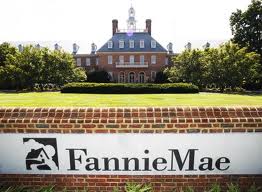
Fannie Mae RIP?


From Mike Walker, Col. USMC (retired)

Fannie Mae RIP?


To the relief of many, the President recently announced that Fannie Mae is going away.

Before the celebrations begin, we need to remember that understanding the “why” is more important than the “whom” in figuring out what caused the collapse of the home mortgage industry that ushered in the Great Recession.

Yes, Fannies Mae is a “who” as in it played a critical role in the collapse.

But why an organization that had worked well for nearly six decades helped to destroy the home mortgage industry and itself in the process is the real lesson we must learn.

To understand the “why we need to explode a few myths.

Myth #1: Home Ownership is the Only Solution

Somehow we uncritically assumed that the “American Dream” demanded home ownership. While home ownership certainly is good thing, renting can also be a good thing, especially in today’s mobile society.

Germany never adopted the home-ownership dogma (only 42% of Germans buy their homes) yet Germany is universally regarded as one of the best nations in the world to live. Conversely, Bulgaria leads the world with a 97% homeownership rate.

That only proves that quality of life should never be tied to a one-dimension inanity called “wealth” and the radicals be damned (for them, renters do not acquire “wealth” through home ownership creating an “unjust” society).

Lesson: We should be wary of any social policy that pursues home ownership as an end in itself.

Myth #2: Fannie Mae is the Root of the Problem

That is not true. During most of its first sixty years of existence, Fannie Mae established what was often referred to as the “gold standard” in setting home lending criteria. Fannie Mae provided great liquidity and the home mortgage marketplace relied on Fannie Mae underwriting guidelines and from the 1930s into the 1990s Fannie Mae kept us all on safe, firm ground.

The subprime market was not for Fannie Mae. While it had always existed, it was a back-alley operation for investors with a taste for high risk that earned high returns but could end with a big loss.

That changed in 1993 when the Boston Fed decided to play God by successfully pushing for the destruction of the Fannie Mae “gold standard” underwriting guidelines.

The Boston Fed, using nothing but convoluted financial hypothesizing worth no more than the fairy dust in a kid’s cartoon, declared that subprime mortgages were all high returns while ignoring the associated risk. Heck, argued the wonks at the Boston Fed, Fannie Mae has it all wrong as there is virtually no reason to turn anyone down for a home mortgage.

The back-alley subprime market entered the Washington Beltway and Wall Street at the head of a marching band led by the clowns from the Boston Fed touting “Closing the Gap” underwriting standards as the way to a new nirvana.

The minions in Washington and Wall Street injected “Closing the Gap” standards into the system that were pure poison while packaging it as the nectar of the Gods and Fannie Mae, who dominated the home mortgage industry, became the leader of the pack. Risk managers of any ilk who could see the train wreck coming were brushed aside by the parade.

After little more than a decade, anyone who could scribble their name could get a home loan and everyone in the mortgage industry was making oodles of money.
No risk and high returns overwhelmed the better angels in us who knew the fantasy could not last as we understood at some level that we were doing the wrong thing.

Lesson: Fannie Mae took center stage as the enforcer of the bogus home mortgage underwriting standards to its everlasting shame, but it did not create the poison.

Myth #3: Eliminating Fannie Mae will fix the Home Mortgage Financing Problem

Fannie Mae became a problem because it was huge and a Government Sponsored Enterprise making it a pliable tool to do the bidding, for good and bad, of the Federal Government backed by powerful lobbyists and when “Closing the Gap” was introduced it became very bad indeed.

Failing to understand that Fannies Mae is about power and reach, not policy-making, is to miss the critical cause of the collapse of the home mortgage industry that led to the Great Recession.

Eliminating Fannie Mae will diffuse power thereby making it harder to poison the home mortgage market in the future. That is a prudent safeguard but it is not enough as it ignores the abusive risk-taking that led to the collapse in the first place.

Lesson: Introducing or keeping the poison of a “Closing the Gap” underwriting policy in place without a Fannie Mae is NO CURE; all it means is that it will take longer for the poison to bring down the home mortgage industry in the future.

Mike

Friday, August 02, 2013

Detroit's 'One Party' State Killed It


Detroit's 'One Party' State Killed It

By George Will


In 1860, an uneasy Charles Darwin confided in a letter to a friend: "I had no intention to write atheistically" but "I cannot persuade myself that a beneficent and omnipotent God would have designedly created the Ichneumonidae with the express intention of their feeding within the living bodies of caterpillars."


What appalled him had fascinated entomologist William Kirby (1759-1850): The ichneumon insect inserts an egg in a caterpillar, and the larva hatched from the egg, he said, "gnaws the inside of the caterpillar, and though at last it has devoured almost every part of it except the skin and intestines, carefully all this time avoids injuring the vital organs, as if aware that its own existence depends on that of the insect on which it preys!"
 
Government employees' unions living parasitically on Detroit have been less aware than ichneumon larvae. About them, and their collaborators in the political class, the question is: What. Were. They. Thinking? Well, how did Bernie Madoff or the Enron executives convince themselves their houses of cards would never collapse?
 
Here, where cattle could graze in vast swaths of this depopulated city, democracy ratified a double delusion: Magic would rescue the city (consult the Bible, the bit about the multiplication of the loaves and fishes), or Washington would deem Detroit, as it recently did some banks and two of the three Detroit-based automobile companies, "too big to fail."
 
But Detroit failed long ago. And not even Washington, whose recklessness is almost limitless, is oblivious to the minefield of moral hazard it would stride into if it rescued this city and, then inevitably, others that are buckling beneath the weight of their cumulative follies. It is axiomatic: When there is no penalty for failure, failures proliferate. 
 
This bedraggled city's decay poses no theological conundrum of the sort that troubled Darwin, but it does pose worrisome questions about the viability of democracy in jurisdictions where big government and its unionized employees collaborate in pillaging taxpayers. Self-government has failed in what once was America's fourth-largest city and now is smaller than Charlotte, N.C.
 
Detroit, which boomed during World War II when industrial America was "the arsenal of democracy," died of democracy. Today, among the exculpatory alibis invoked to deflect blame from the political class and the docile voters who empowered it, is the myth that Detroit is simply a victim of "de-industrialization."

In 1950, however, Detroit and Chicago were comparable — except Detroit was probably wealthier, as measured by per capita income. Chicago, too, lost manufacturing jobs, to the American South, to south of the border, to South Korea and elsewhere. But Chicago discerned the future and diversified. It is grimly ironic that Chicago's iconic street is Michigan Avenue. 
 
Detroit's population, which is 62 percent smaller than in 1950, has contracted less than the United Auto Workers membership, which was more than 1 million in 1950, and now is around 390,000. Auto industry executives, who often were invertebrate mediocrities, continually bought labor peace by mortgaging their companies' futures in surrenders to union demands.
 
Then city officials gave their employees — who have 47 unions, including one for crossing guards — pay scales comparable to those of autoworkers. Thus did private-sector decadence drive public-sector dysfunction — government negotiating with government-employees' unions that are government organized as an interest group to lobby itself to do what it wants to do: Grow.
 
Steven Rattner, who administered the bailout of part of the Detroit-based portion of America's automobile industry, says "apart from voting in elections, the 700,000 remaining residents of the Motor City are no more responsible for Detroit's problems than were the victims of Hurricane Sandy for theirs." Congress, he says, should bail out Detroit because "America is just as much about aiding those less fortunate as it is about personal responsibility."
 
There you have today's liberalism: Human agency, hence responsibility, is denied. Apart from the pesky matter of "voting in elections" — apart from decades of voting to empower incompetents, scoundrels, and criminals, and to mandate unionized rapacity — no one is responsible for anything. Popular sovereignty is a chimera because impersonal forces akin to hurricanes are sovereign.
 
The restoration of America's vitality depends on, among many other things, avoiding the bottomless sinkhole that would be created by the federal government rescuing one-party cities, and one-party states such as Illinois, from the consequences of unchecked power. Those consequences of such power — incompetence, magical thinking, cynicism, and sometimes criminality — are written in Detroit's ruins.